Gobi Fossil Heritage

Dinosaurs Found In Mongolia’s Gobi Desert

Mongolia’s Gobi Desert is one of the world’s most important dinosaur fossil regions. Scientists have discovered many dinosaur species here, including predators, plant-eaters, armored dinosaurs, duck-billed dinosaurs, nesting dinosaurs, and bird-like theropods. This page introduces 12 of the most iconic dinosaurs connected to the Mongolian Gobi.

12

Iconic dinosaurs listed here

70M+

Years of ancient history

Gobi

One of Earth’s richest fossil regions

Landmark Discoveries

Moments That Changed Paleontology

1922 dinosaur egg discovery at Bayanzag
1922

The First Dinosaur Eggs Ever Found

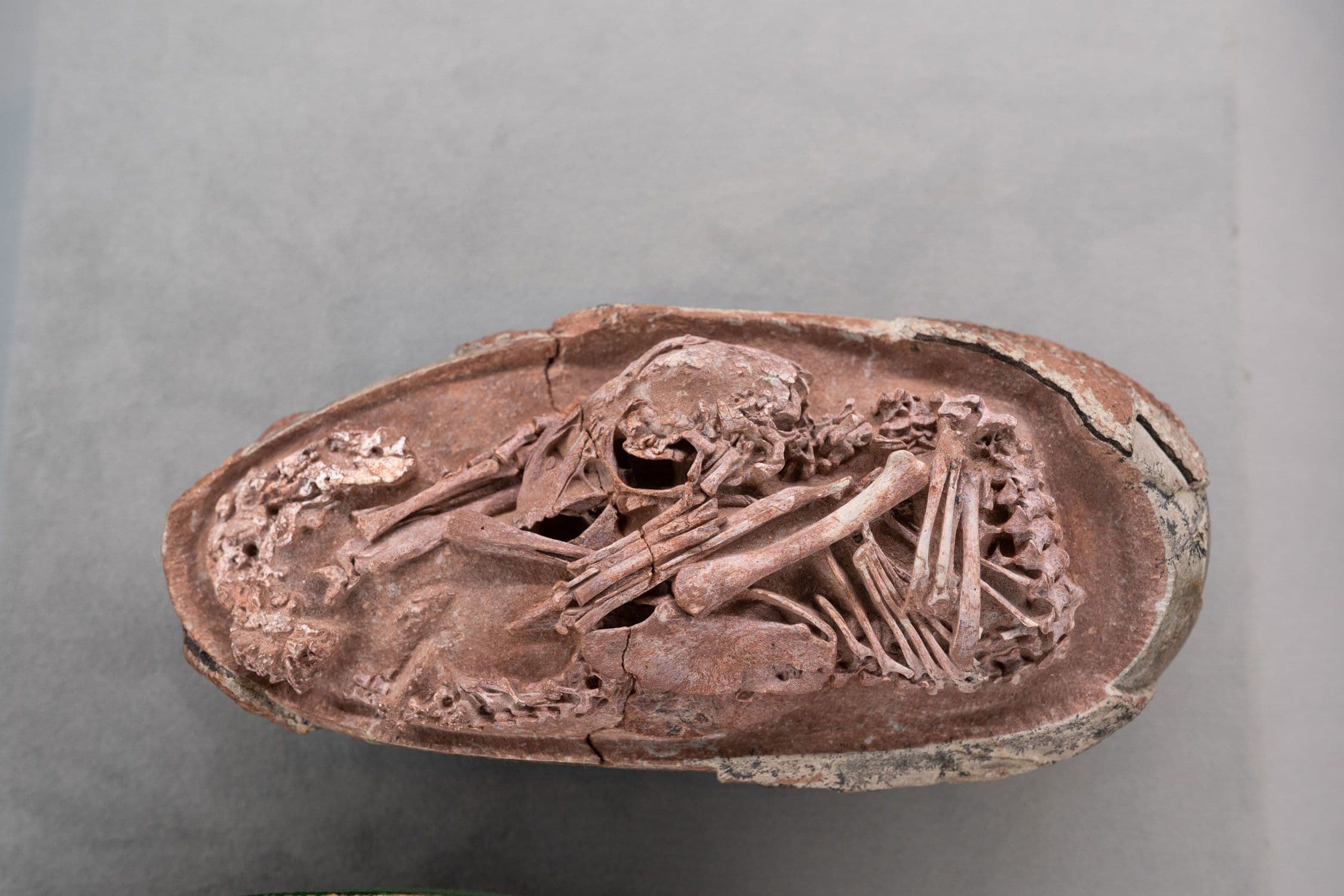
In 1922, the American Museum of Natural History expedition led by Roy Chapman Andrews arrived at Bayanzag. When palaeontologist Granger scrambled down into the basin to ask local herders for directions, he spotted enormous bones protruding from the cliff — unmistakably dinosaur bones. The team returned immediately, and their subsequent excavation yielded one of the greatest palaeontological finds in history: the first confirmed dinosaur eggs ever discovered by modern science.

This single discovery proved, beyond doubt, that dinosaurs reproduced by laying eggs — a question that had never before been scientifically confirmed. The site was named Flaming Cliffs by Andrews himself, struck by the way the red cliffs blazed in the setting sun. Back then, the site was known as simply "Bayanzag." The name "Ulalzakh Tsonj" — Flaming Cliffs in Mongolian — came later, translated by Mongolian scholars to reflect what Andrews had described.

Fighting Dinosaurs fossil at Tögrögiin Shiree
1971

The Fighting Dinosaurs of Tögrögiin Shiree

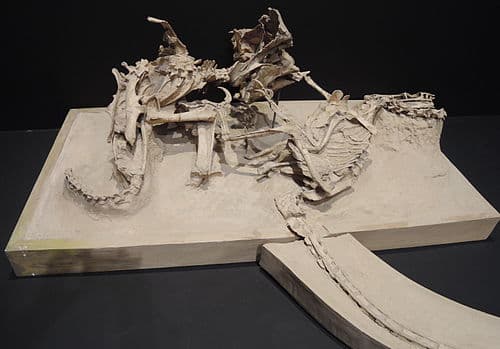
About 30 kilometers west of Bayanzag lies Tögrögiin Shiree — a site of white sandstone columns that has produced one of the most astonishing fossil discoveries in history. In 1971, a joint Polish-Mongolian expedition uncovered two dinosaurs locked in mortal combat: a Protoceratops and a Velociraptor, frozen in the exact moment of their struggle. The fossil is now housed in the Natural History Museum and remains one of the most iconic specimens in world palaeontology.

Scientists believe the animals were buried alive by a sudden sandstorm while fighting — preserved in their final pose. Tögrögiin Shiree has also yielded nests of up to 17 juvenile Protoceratops together, offering extraordinary insight into dinosaur parenting and social behavior. The site draws international scientists and photographers alike, drawn by its white cliff formations and the exceptional density of Protoceratops fossils found across different species and life stages.

Discovery Site

Tögrögiin Shiree — A White Desert Wonderland

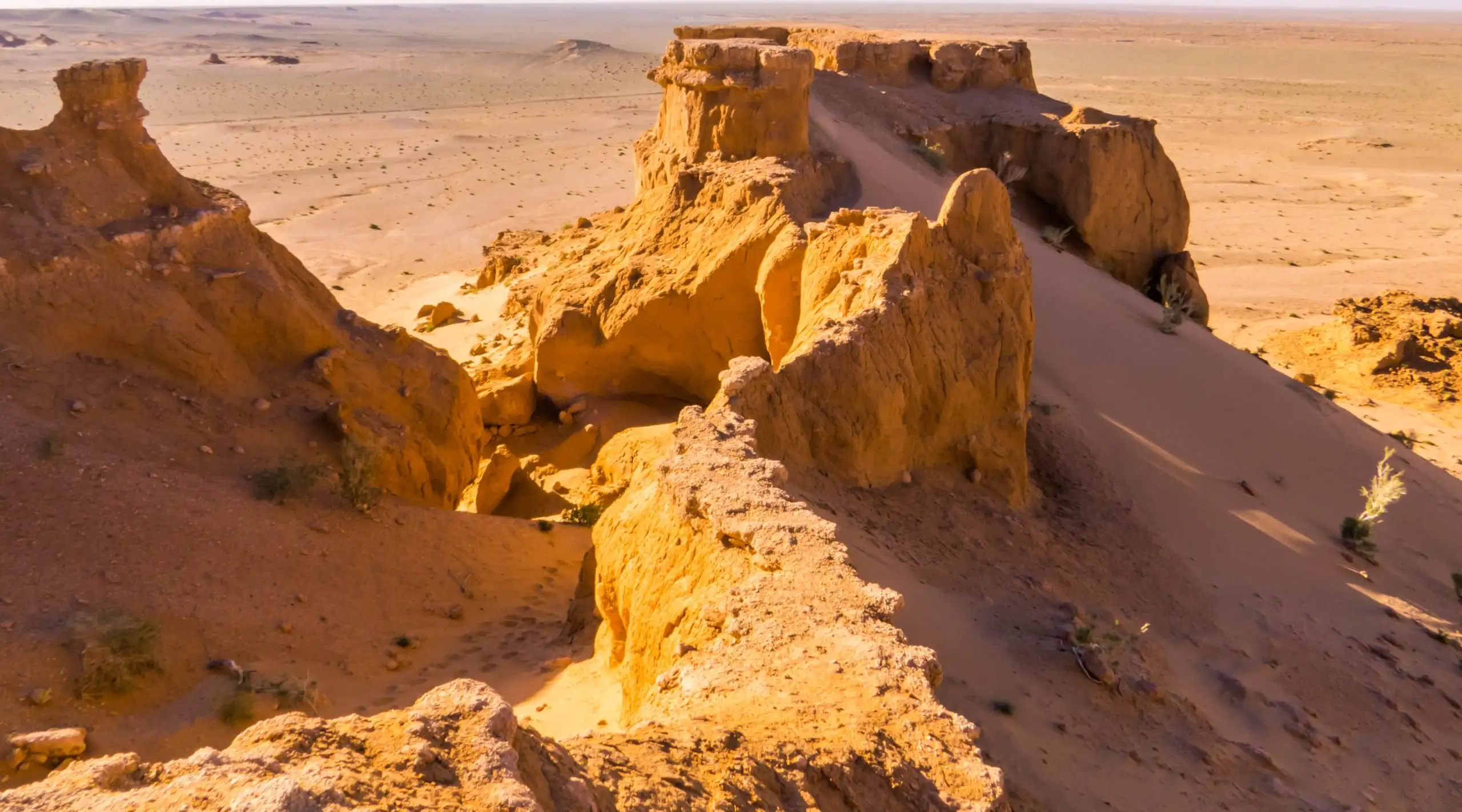
While Bayanzag’s red cliffs are world-famous, Tögrögiin Shiree — located approximately 30 km to the west — offers a dramatically different landscape: pale white sandstone formations sculpted by wind and time. This is not just a striking visual contrast; it is also where paleontology has repeatedly rewritten scientific understanding.

The site has yielded enormous numbers of Protoceratops fossils across nearly every life stage — juveniles, adults, and nesting specimens — making it one of the richest single-species fossil localities in the world. For photographers, the white columns against open desert sky create a scene unlike any other in Mongolia.

Stone Age tools have also been found near Tögrögiin Shiree, confirming that early humans occupied this region thousands of years before modern exploration arrived.

Tögrögiin Shiree white sandstone formations
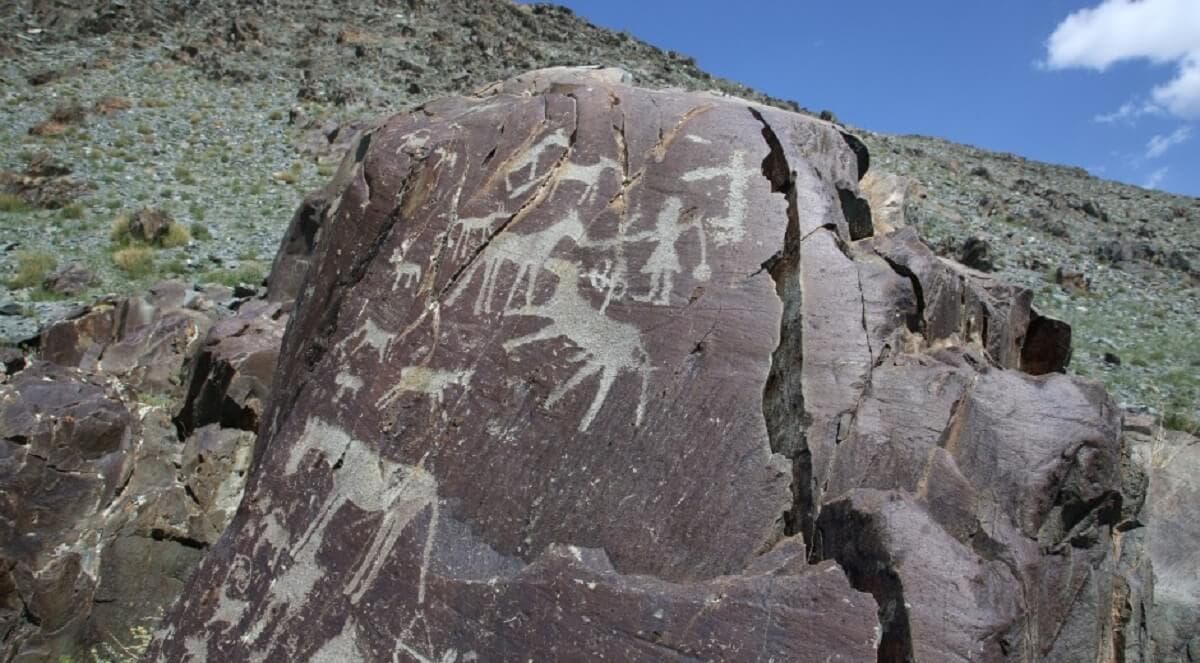
Rock art at Gurvan Tsakhir mountain near Bayanzag

Prehistoric Heritage

Rock Art at Gurvan Tsakhir Mountain

Within the wider Bayanzag area, the three-peaked Gurvan Tsakhir mountain rises from the surrounding plains. In 2002, a team discovered remarkable rock art on these cliffs — petroglyphs that were formally studied in 2017 with scholars from the National University of Mongolia, led by Dr. Iderkhangai and his student Tsendiin-Ochir, who now works as an archaeologist at the provincial natural history museum.

The images span approximately 5,000 to 10,000 years in age, scratched into rock faces using stone tools and other implements. They depict deer, maral, ibex, snow leopard, and scenes of human hunters in active pursuit — vivid windows into an ancient world. The findings confirm that Bayanzag has been inhabited and revered by humans across an extraordinary span of time.

This rock art represents a continuum from the age of dinosaurs to the age of early humans, making the Bayanzag landscape one of the few places on Earth where both eras can be witnessed in a single visit.

Dinosaur Guide

Famous Dinosaurs From Mongolia’s Gobi

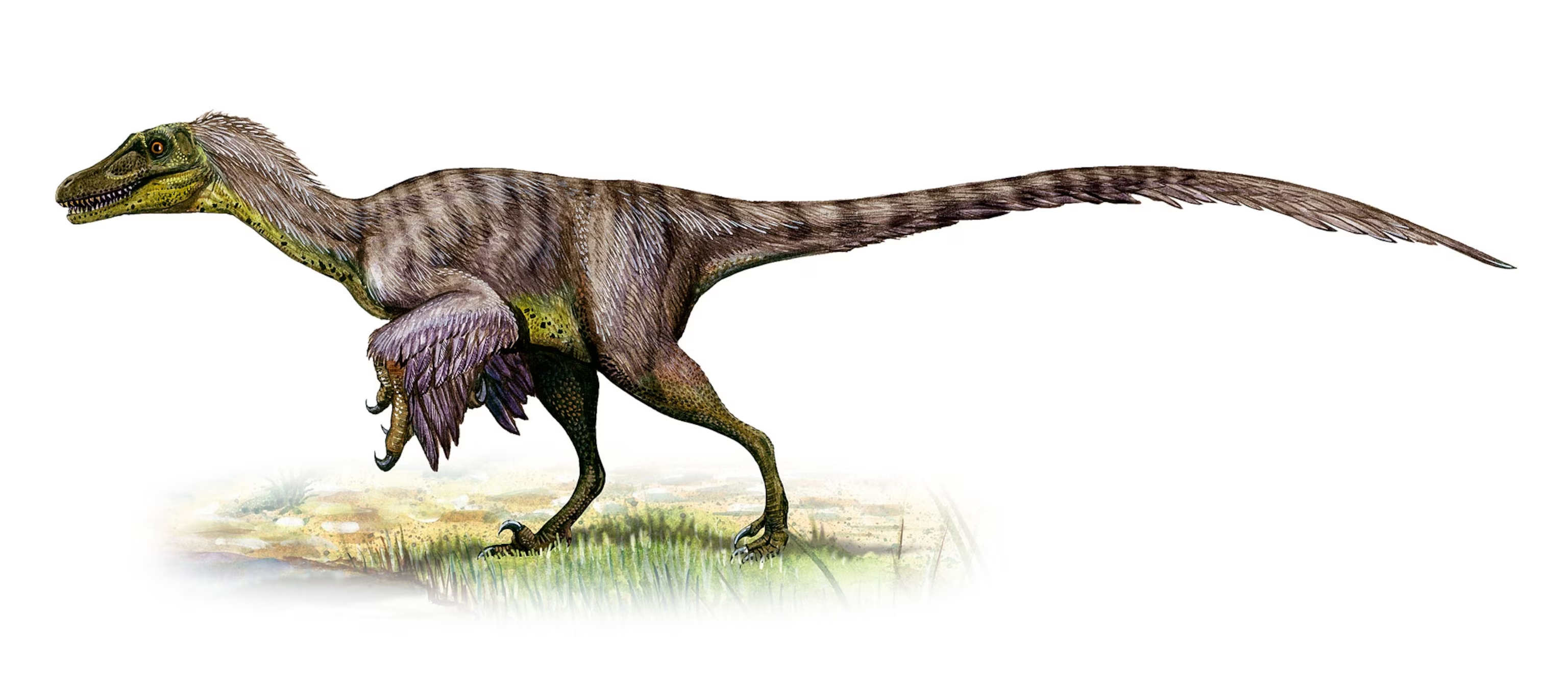
Velociraptor mongoliensis dinosaur from Mongolia Gobi Desert

Velociraptor mongoliensis

Late Cretaceous

Type: Small carnivorous predator

Found in: Bayanzag / Flaming Cliffs

Velociraptor was a small but fast predator from the Gobi Desert. It was much smaller than the movie version, but it had sharp claws, strong legs, and a lightweight body built for hunting.

Why It Matters

One of the most famous Mongolian dinosaurs, known worldwide from the legendary Fighting Dinosaurs fossil with Protoceratops.
Protoceratops andrewsi dinosaur from Mongolia Gobi Desert

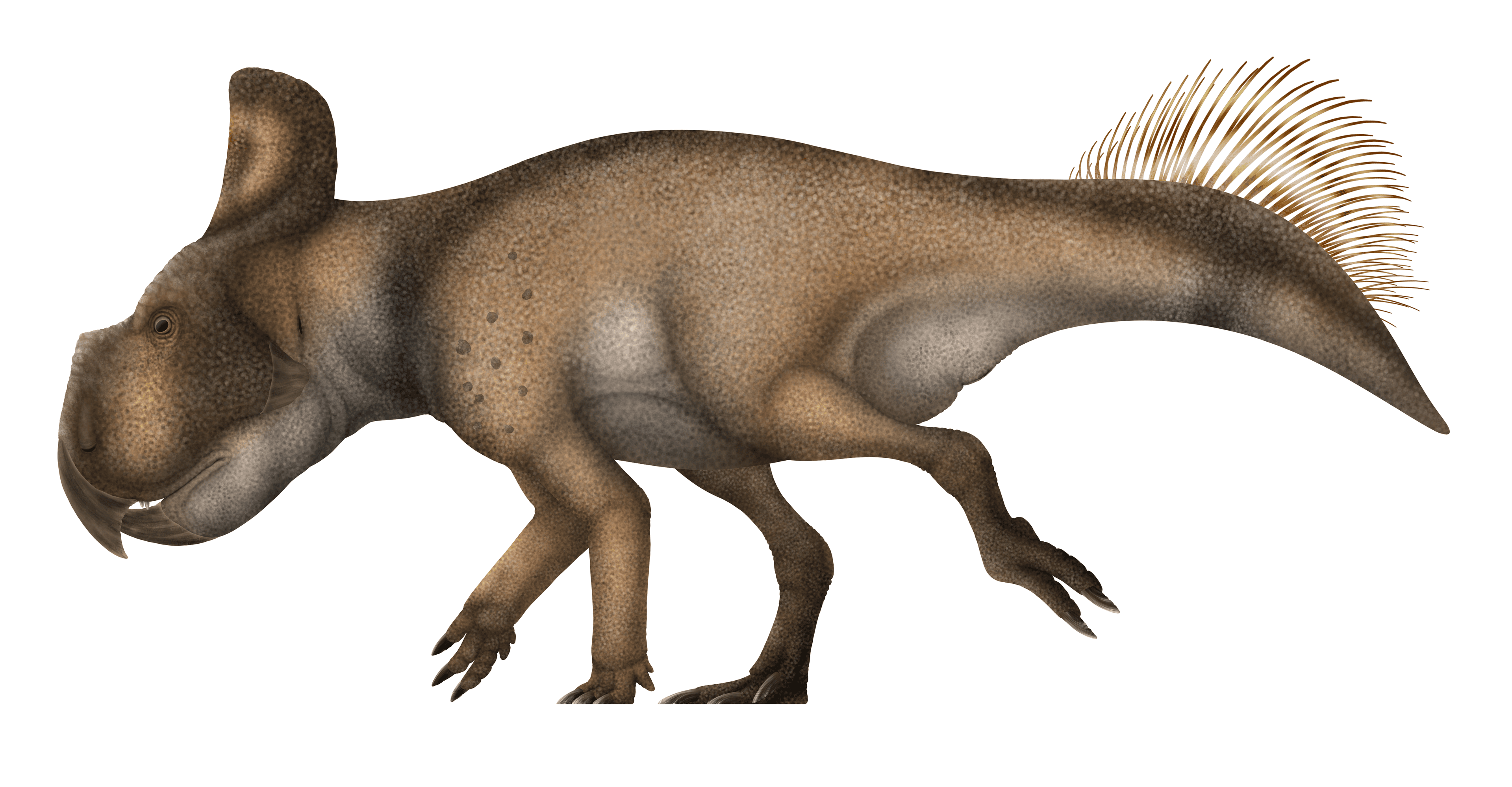
Protoceratops andrewsi

Late Cretaceous

Type: Herbivore

Found in: Bayanzag / Flaming Cliffs

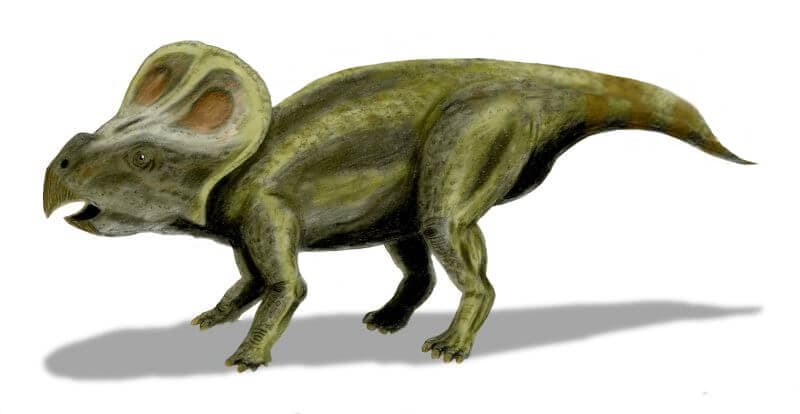
Protoceratops was a sheep-sized plant-eating dinosaur with a large neck frill. It lived in groups and became one of the most common fossils found in the Gobi.

Why It Matters

Important for understanding dinosaur nesting, social behavior, and the ancient desert ecosystem of Mongolia.

Oviraptor philoceratops dinosaur from Mongolia Gobi Desert

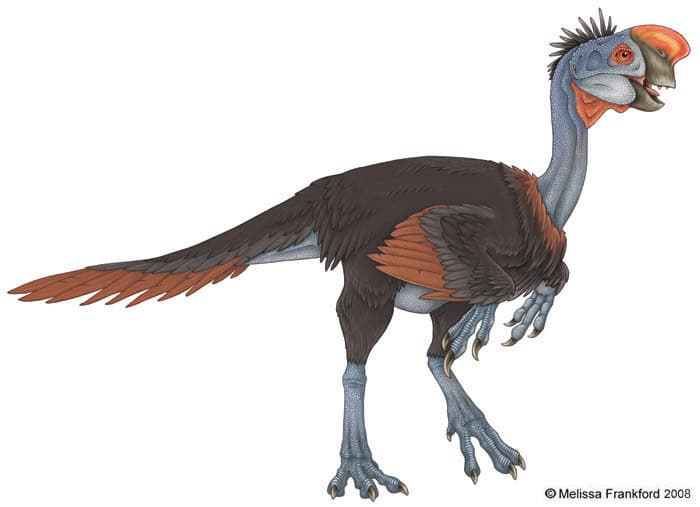
Oviraptor philoceratops

Late Cretaceous

Type: Small theropod

Found in: Bayanzag / Flaming Cliffs

Oviraptor was first thought to be an egg thief because it was found near fossil eggs. Later discoveries suggested it may have been protecting its own nest.

Why It Matters

A powerful example of how Mongolian fossils changed scientific understanding over time.

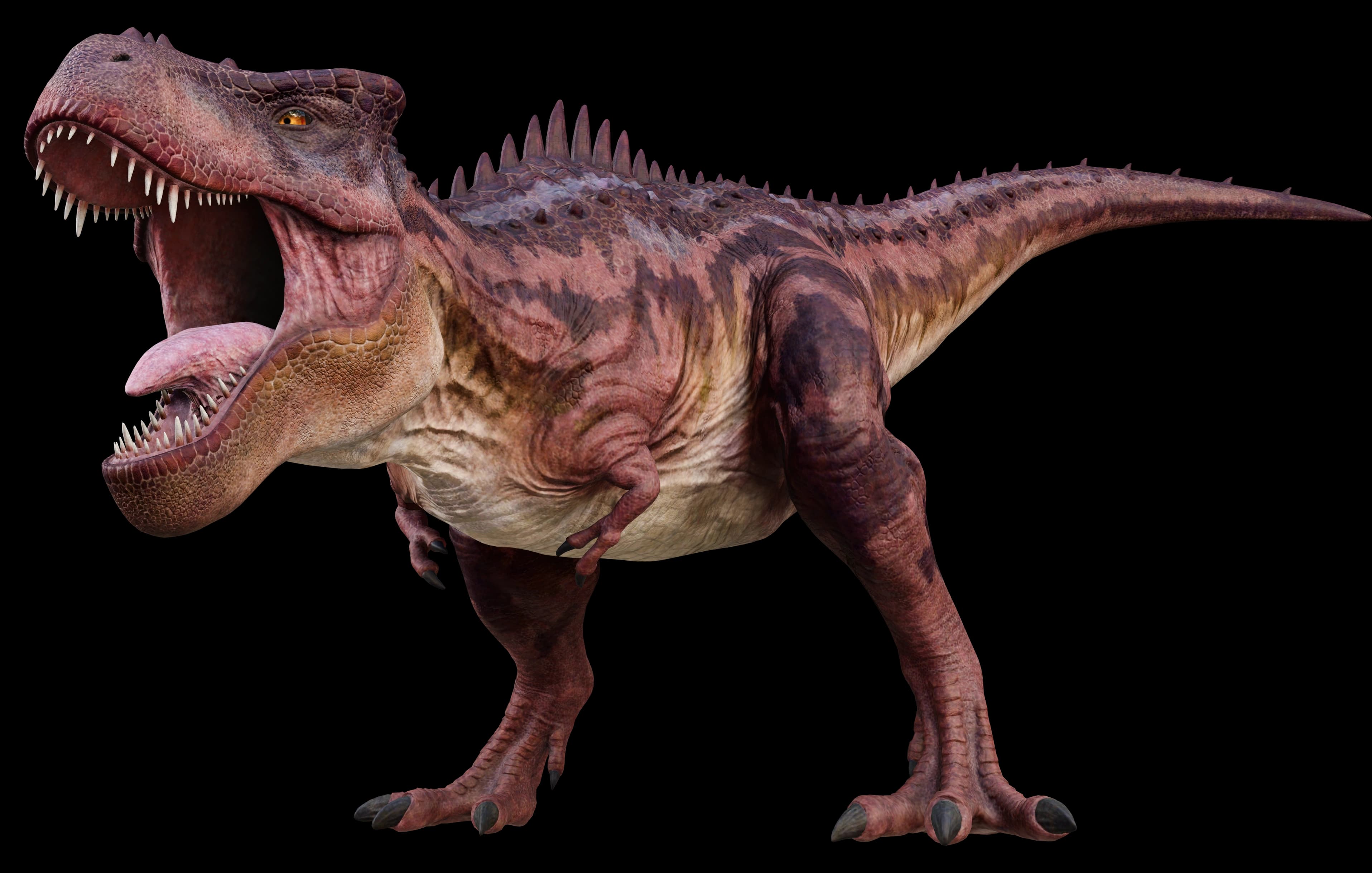
Tarbosaurus bataar dinosaur from Mongolia Gobi Desert

Tarbosaurus bataar

Late Cretaceous

Type: Large carnivorous predator

Found in: Nemegt Formation, Gobi Desert

Tarbosaurus was one of the largest predators of the Mongolian Gobi. It was closely related to Tyrannosaurus rex and stood at the top of the food chain.

Why It Matters

One of Mongolia’s most iconic dinosaur fossils and a major symbol of Mongolian paleontology.

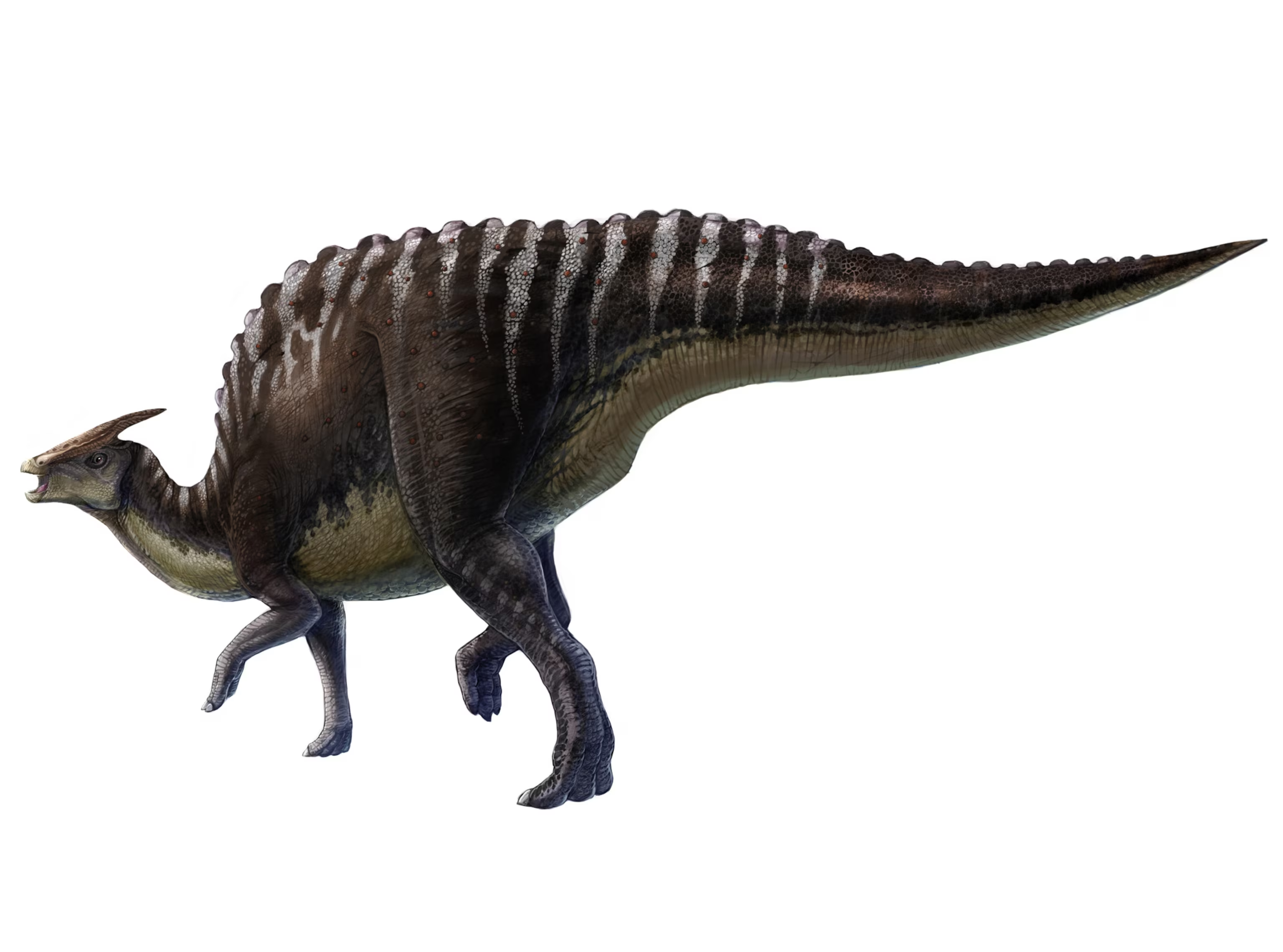
Saurolophus angustirostris dinosaur from Mongolia Gobi Desert

Saurolophus angustirostris

Late Cretaceous

Type: Duck-billed herbivore

Found in: Nemegt Formation, Gobi Desert

Saurolophus was a large plant-eating dinosaur with a distinctive crest on its head. It likely moved in herds and lived near rivers and greener areas of the ancient Gobi.

Why It Matters

Shows that the ancient Gobi was not only dry desert, but also had river systems and rich plant life.

Deinocheirus mirificus dinosaur from Mongolia Gobi Desert

Deinocheirus mirificus

Late Cretaceous

Type: Large omnivorous theropod

Found in: Nemegt Formation, Gobi Desert

Deinocheirus was one of the strangest dinosaurs ever found in Mongolia. It had huge arms, a long body, and an unusual duck-like skull.

Why It Matters

For decades, scientists only knew it from giant arms. Later Mongolian discoveries revealed its full unusual body shape.

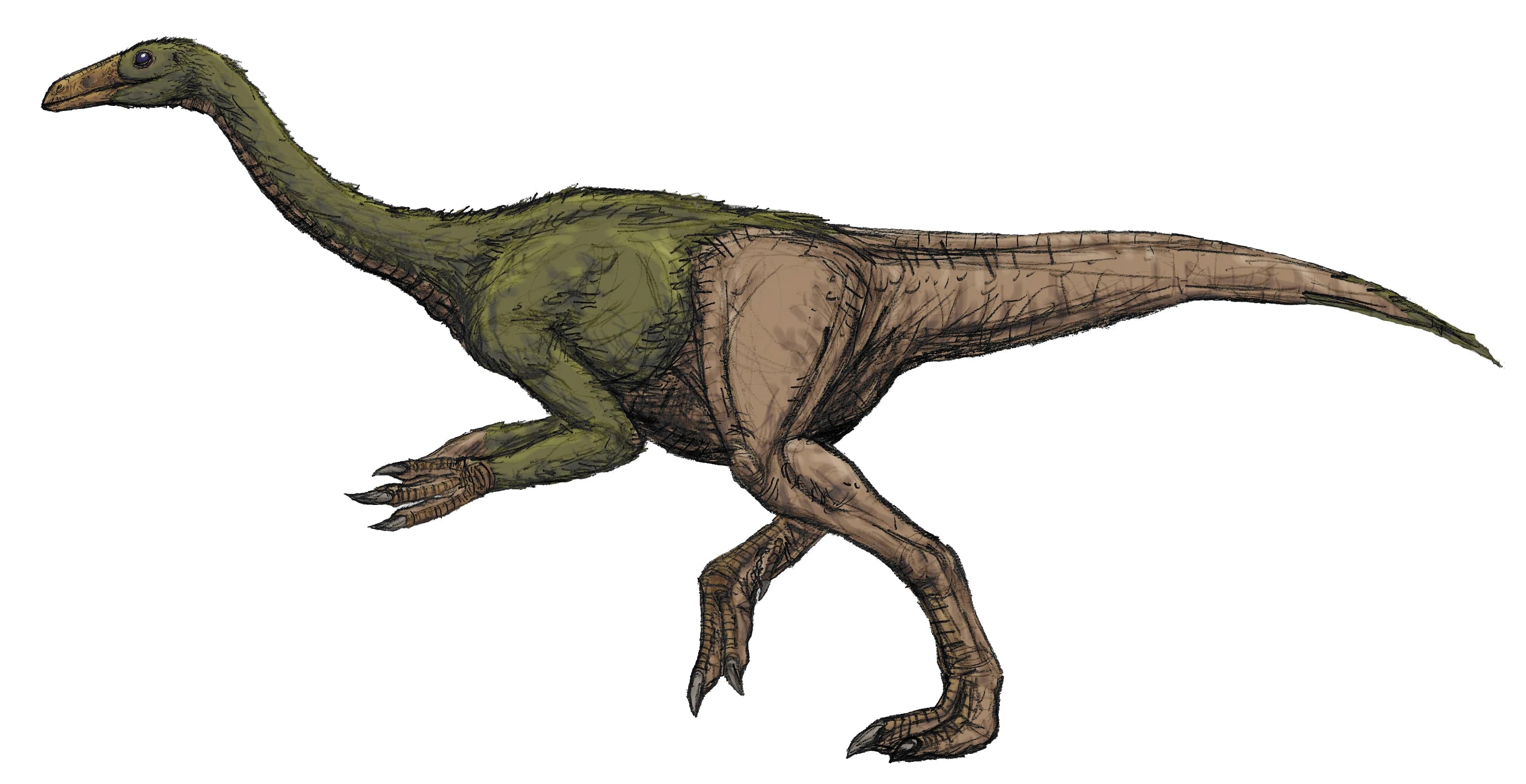
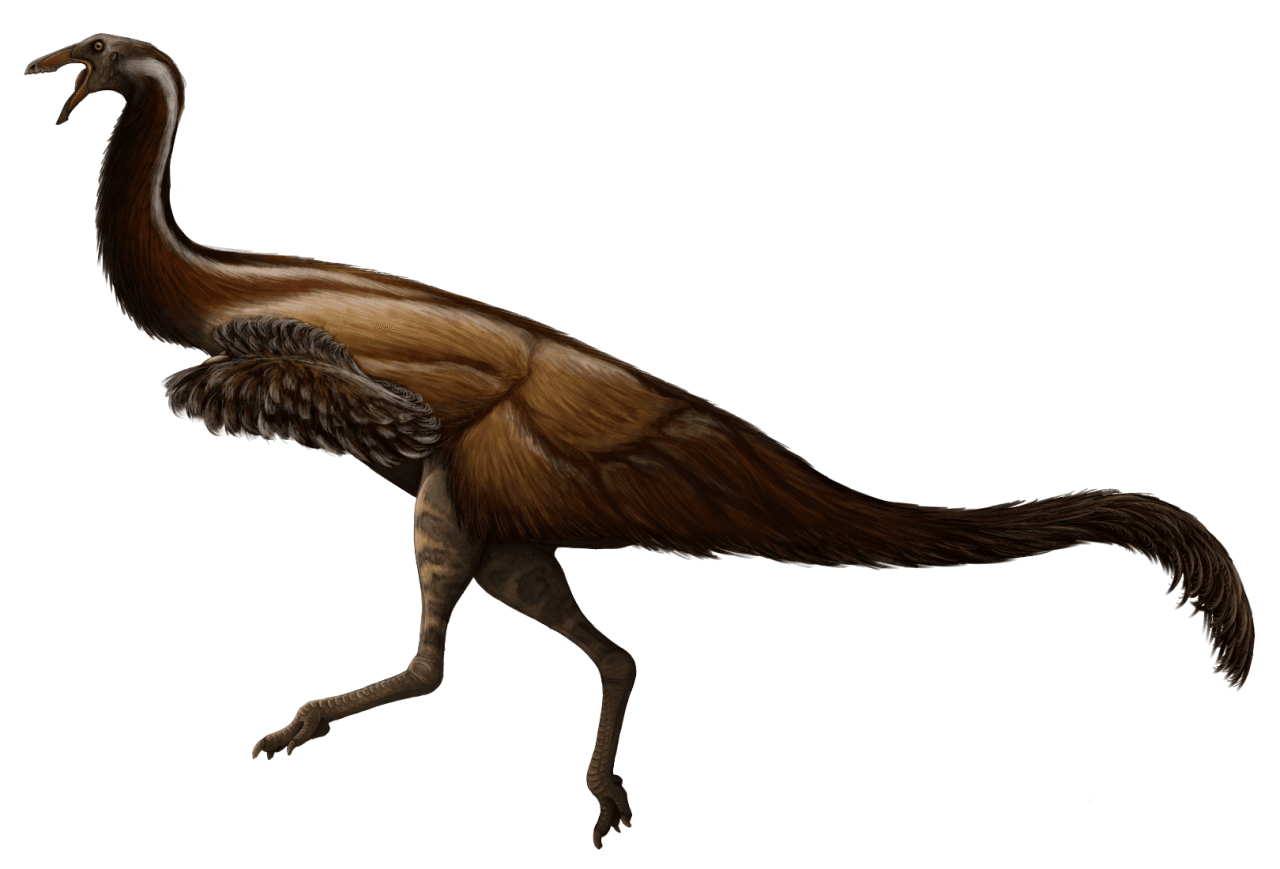
Gallimimus bullatus dinosaur from Mongolia Gobi Desert

Gallimimus bullatus

Late Cretaceous

Type: Fast-running omnivore

Found in: Nemegt Formation, Gobi Desert

Gallimimus was a long-legged, ostrich-like dinosaur built for speed. It had a small head, long neck, and lightweight body.

Why It Matters

One of the best examples of fast-running dinosaurs from Mongolia’s Gobi.

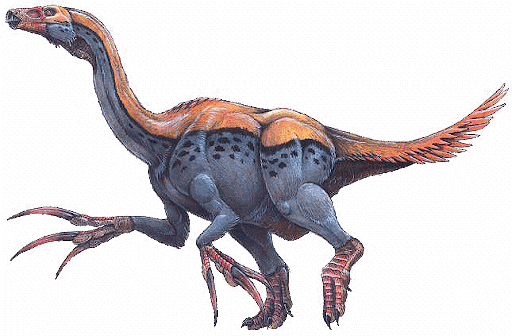
Therizinosaurus cheloniformis dinosaur from Mongolia Gobi Desert

Therizinosaurus cheloniformis

Late Cretaceous

Type: Large therizinosaur

Found in: Gobi Desert

Therizinosaurus is famous for its enormous claws, some of the longest known from any animal. Despite its frightening claws, it may have mainly eaten plants.

Why It Matters

One of the most unusual dinosaurs from Mongolia and a popular species for visitors interested in strange prehistoric animals.

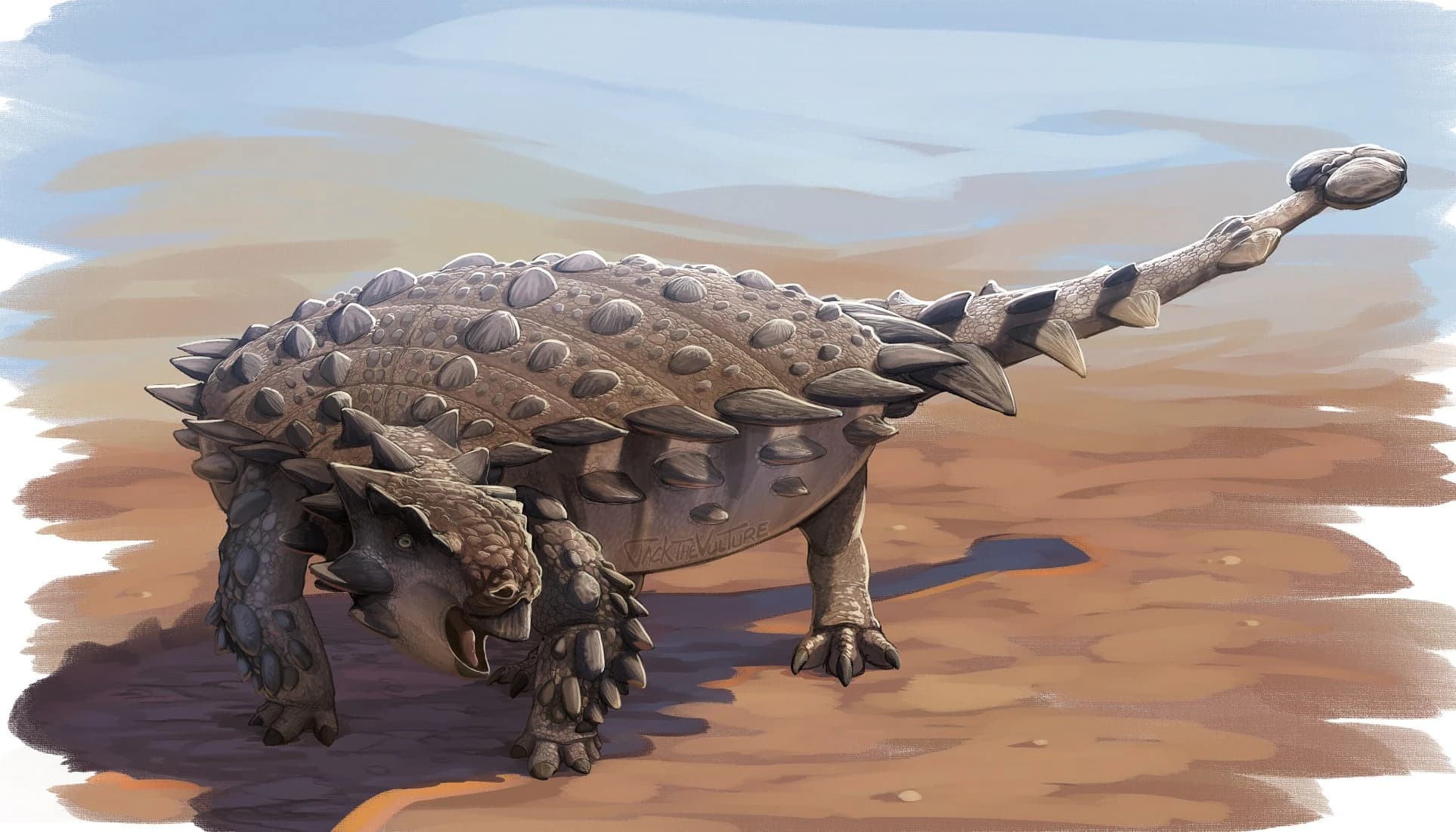
Pinacosaurus grangeri dinosaur from Mongolia Gobi Desert

Pinacosaurus grangeri

Late Cretaceous

Type: Armored herbivore

Found in: Gobi Desert

Pinacosaurus was a small armored dinosaur covered with protective body plates. It belonged to the ankylosaur family.

Why It Matters

Important because several young individuals have been found together, helping scientists understand dinosaur growth and group behavior.

Prenocephale prenes dinosaur from Mongolia Gobi Desert

Prenocephale prenes

Late Cretaceous

Type: Dome-headed herbivore

Found in: Gobi Desert

Prenocephale was a small dinosaur with a thick, rounded skull. It belonged to the pachycephalosaur group, often called dome-headed dinosaurs.

Why It Matters

Helps explain the diversity of small herbivorous dinosaurs that lived in the ancient Gobi.

Mononykus olecranus dinosaur from Mongolia Gobi Desert

Mononykus olecranus

Late Cretaceous

Type: Small alvarezsaurid

Found in: Gobi Desert

Mononykus was a small, bird-like dinosaur with very short arms and one large claw on each hand. It may have used its claws to dig into insect nests.

Why It Matters

Shows how diverse and bird-like some Mongolian theropod dinosaurs were.

Zanabazar junior dinosaur from Mongolia Gobi Desert

Zanabazar junior

Late Cretaceous

Type: Troodontid predator

Found in: Gobi Desert

Zanabazar was a small, intelligent predator with a large brain relative to its body size. It belonged to a group closely related to birds.

Why It Matters

Named after the famous Mongolian spiritual and artistic figure Zanabazar, connecting science with Mongolian heritage.

Important Note

How Many Dinosaur Species Were Found In The Gobi?

There is no simple single number for travelers because new discoveries, renamed species, and scientific reclassification can change the count over time. Instead of saying one fixed number, this page introduces 12 of the most famous and visitor-friendly dinosaur names connected to Mongolia’s Gobi fossil heritage.

For a tourism website, this approach is safer, clearer, and more useful: it gives travelers real names, stories, and reasons why the Gobi is one of the world’s great dinosaur landscapes.