Discover
Bayanzag Landscape
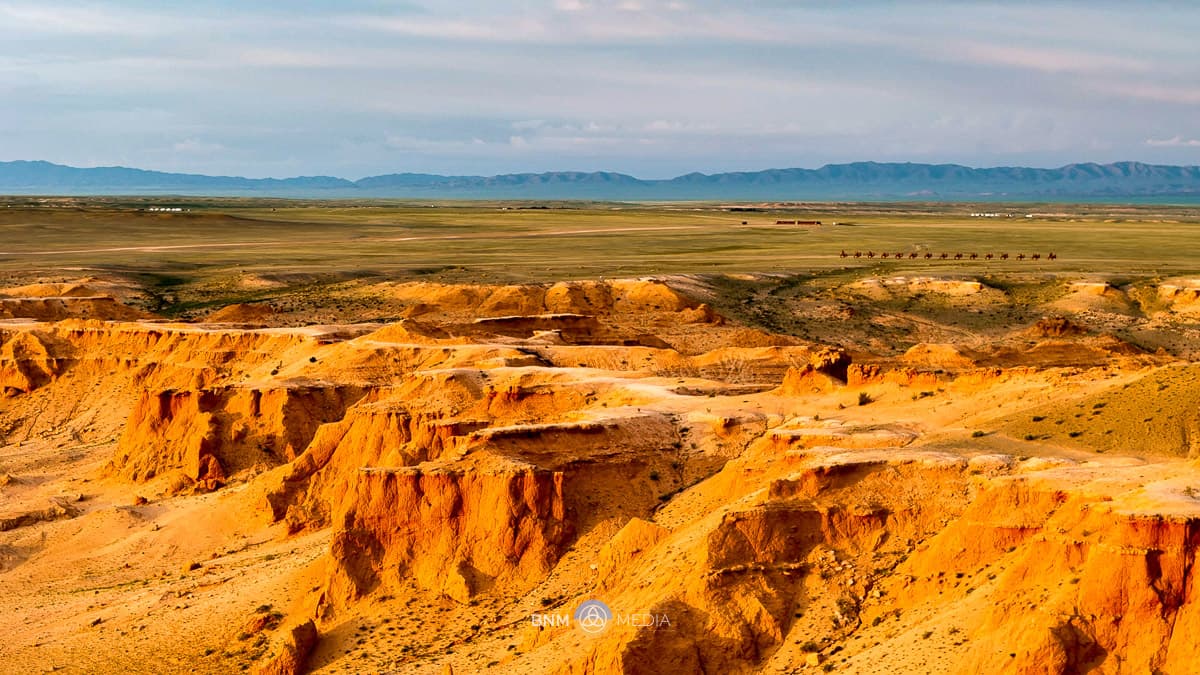
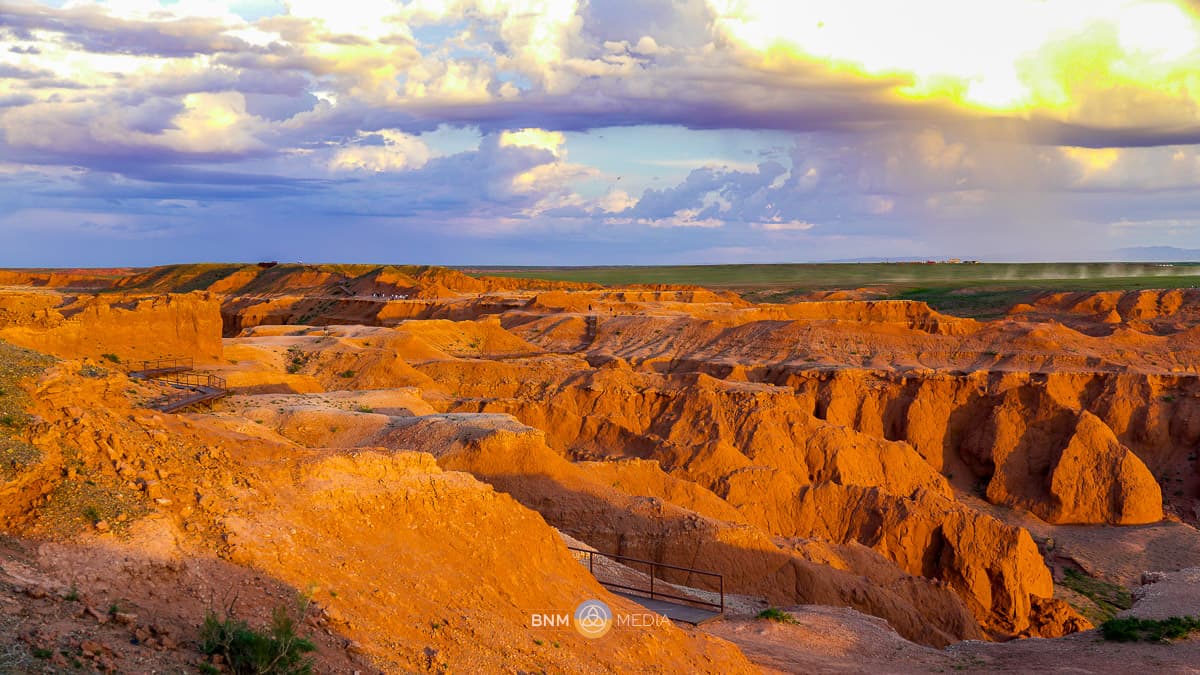
Bayanzag, also known as the Flaming Cliffs, is one of the most iconic landscapes of Mongolia’s Gobi Desert. Its red cliffs, wide horizons, dry desert air, and glowing sunset light make it a place that feels both ancient and cinematic.
The Flaming Cliffs
A Desert Landscape Shaped By Time
The landscape of Bayanzag is defined by red sandstone formations, open desert plains, and dramatic erosion patterns. The cliffs are not extremely high, but their color, texture, and position in the empty Gobi make them visually powerful.
During the day, the cliffs can look dry and quiet. But near sunset, the entire area changes. The warm light turns the rocks deep orange, red, and gold, which is why many travelers remember Bayanzag as one of the most atmospheric places in Mongolia.
Landscape Features
What Makes Bayanzag Visually Special
Red Sandstone Cliffs
Bayanzag is famous for its deep red and orange cliffs, shaped by wind, time, and desert erosion.
Wide Gobi Horizon
The open desert around Bayanzag gives travelers a powerful sense of space, silence, and freedom.
Golden Sunset Light
At sunset, the cliffs glow like fire, creating one of the most beautiful views in the South Gobi.
Ancient Desert Terrain
The landscape feels prehistoric, making it easy to imagine the dinosaurs that once lived here.
Best Experience
How To Enjoy The Landscape
Bayanzag is best experienced slowly. Instead of only stopping for a quick photo, take time to walk along the edge of the cliffs, look back at the desert plains, and stay until the color of the rocks begins to change.
The area is also excellent for quiet exploration. You do not need a difficult hike to enjoy it, but a guided walk helps you notice the shape of the land, fossil history, and hidden viewpoints.
Photography Tips
For Photo & Video
- Best light is usually 1 hour before sunset.
- Use a wide lens for the cliffs and horizon.
- Bring a telephoto lens for compressed desert layers.
- Wind can be strong, so protect your camera gear.
Living Ecosystem
The Saxaul Forest of Bayanzag
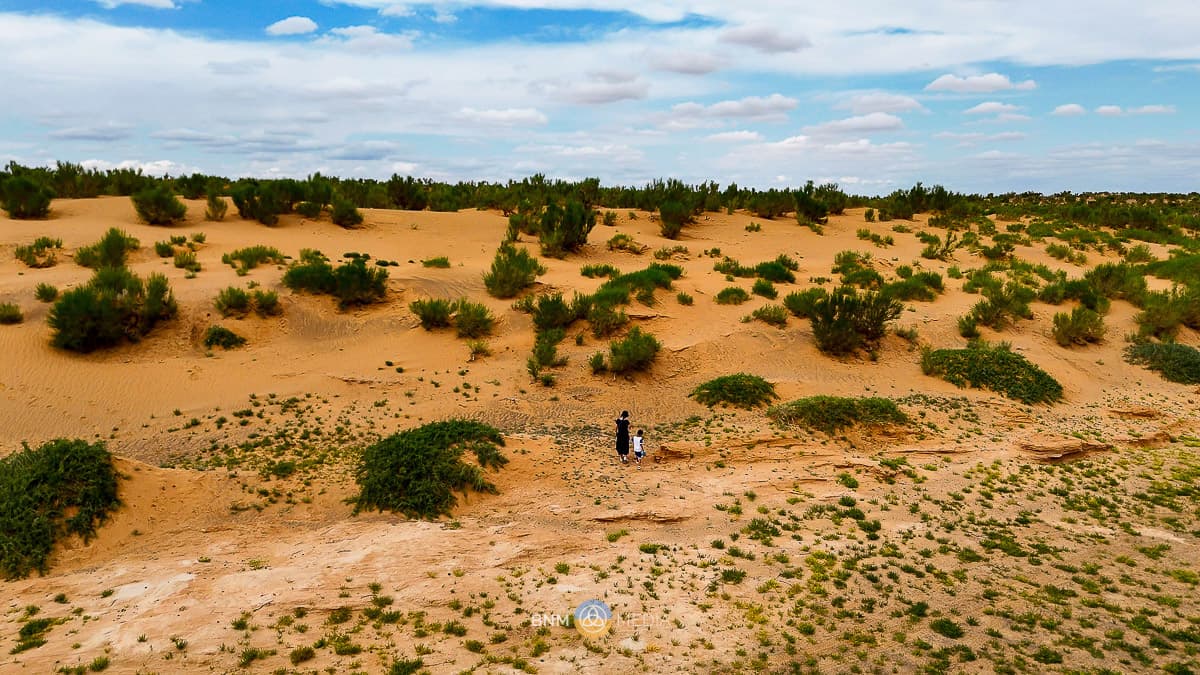
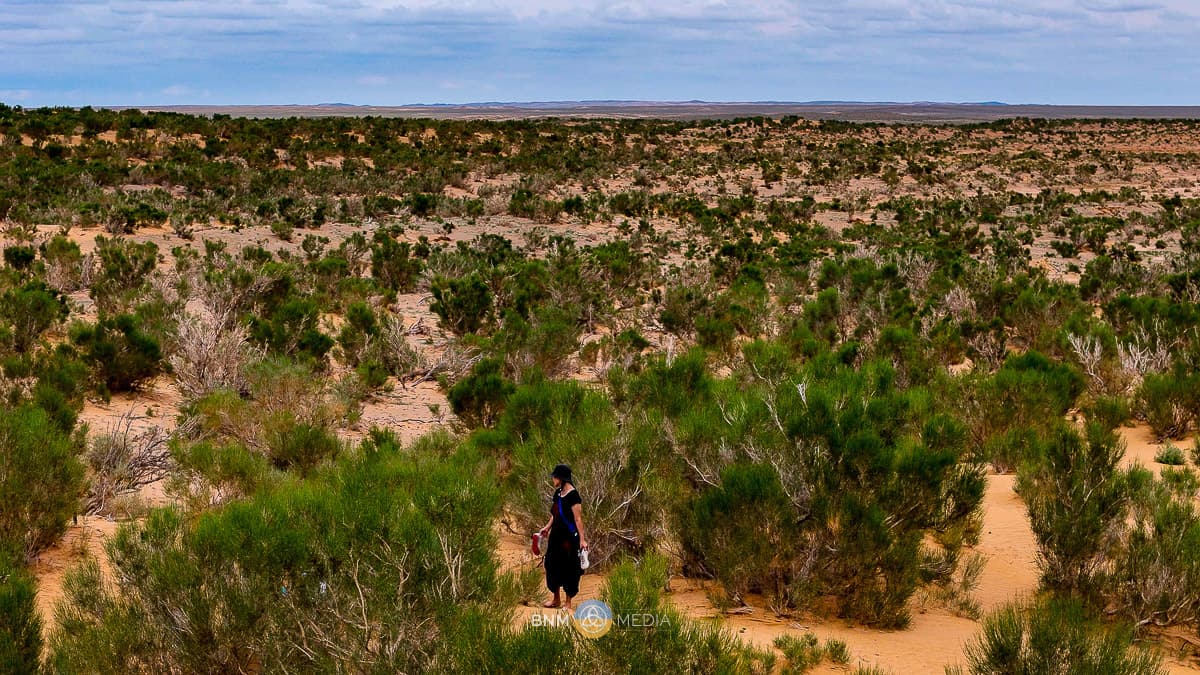
Bayanzag is not only about red cliffs — it is home to one of the Gobi's most important ecosystems: a dense saxaul forest. The saxaul tree is now among the rarest plants in Mongolia's desert and is protected at the national level. A single saxaul can take hundreds of years to reach full size, meaning each tree standing in the forest today has witnessed centuries of this landscape's history.
Historically, the saxaul groves around Bayanzag were heavily used as fuel when Bulgan soum's population grew and administrative infrastructure expanded. This use significantly reduced the forest. Today, the saxaul is fully protected, and local communities actively participate in replanting efforts — fencing areas, preventing livestock from entering, and nurturing new growth.
The saxaul forest is the ecological spine of Bayanzag. Within its canopy, birds nest, small mammals shelter, and the entire food web of this desert ecosystem finds its foundation.
Wildlife
Rare Species Found at Bayanzag
 Red List
Хулан жороо
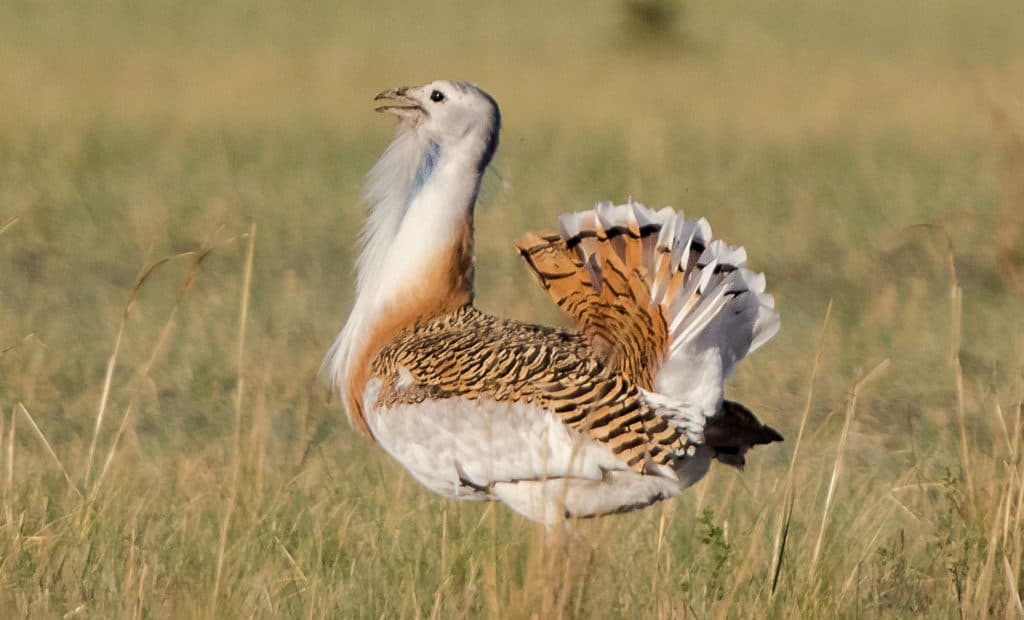
Mongolian Houbara Bustard
One of the most sought-after birds for birdwatchers visiting Mongolia. The Mongolian Houbara Bustard lives in the saxaul groves of Bayanzag — making it the top wildlife draw for international birdwatchers.
 Red List
Загийн бор шувуу
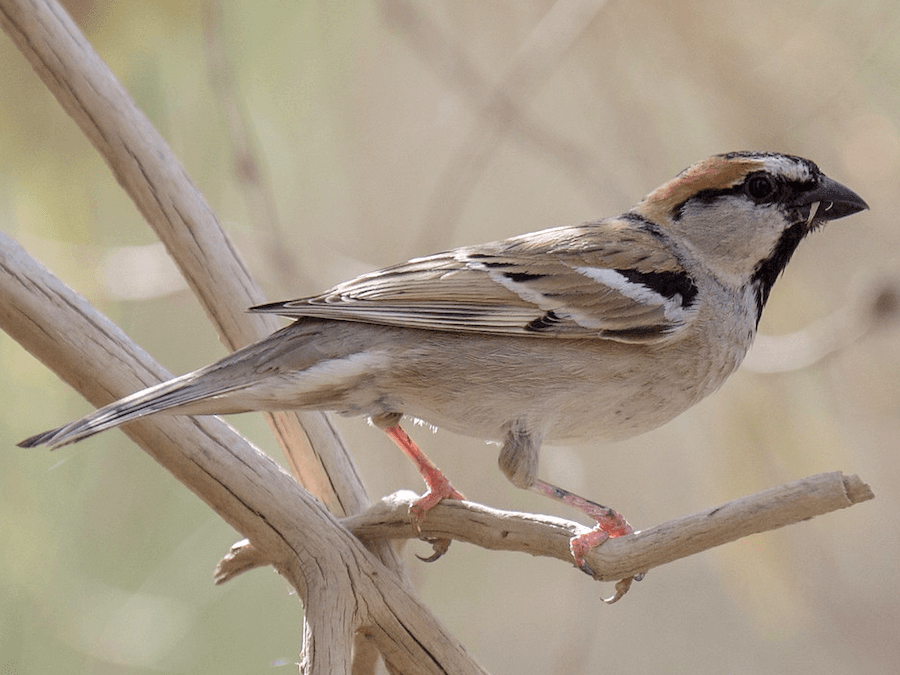
Saxaul Sparrow
Listed on Mongolia's Red Book of endangered species, the Saxaul Sparrow depends entirely on the saxaul ecosystem to survive. Foreigners who notice it are often more excited than locals — a reminder of how rare it has become.
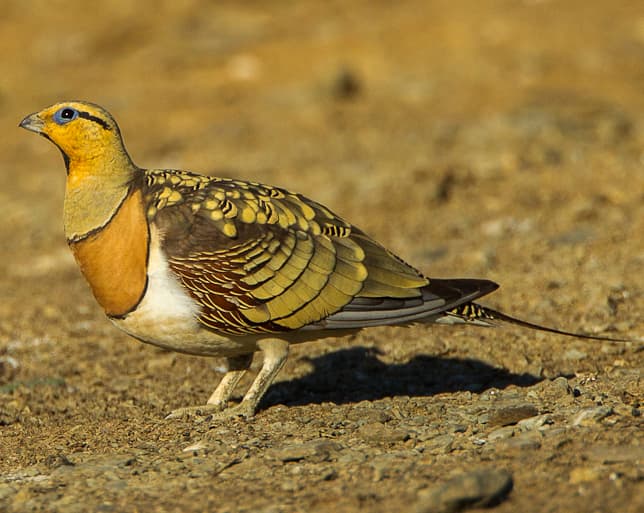 Red List
Цөлийн зэржгэнэ
Mongolian Sandgrouse
The Sandgrouse is one of the most visually distinctive birds of the Gobi's open terrain. It also appears on Mongolia's Red List and inhabits the broader Bayanzag landscape year-round.
Mammals
The Great Gerbil & Desert Mammals
The saxaul forest supports Mongolia's largest rodent — the Great Gerbil, known locally as the Morin Tsoloo. Colonies of Great Gerbils live within the saxaul groves, and recent increased rainfall in 2024–2025 has caused their populations to grow noticeably around Bayanzag.
Joining them are the Pygmy Jerboa, Siberian Jerboa, Ökhön Süült, Gozgor, and various other desert rodents. These prey animals in turn support a chain of predators: Pallas's cat, steppe polecat, marbled polecat, lesser kestrel, saker falcon, and long-legged buzzard. A healthy gerbil population means a healthy Bayanzag.
Hidden Water
The Lake That Forms After Rain
Near Bayanzag, a small lake forms naturally after rainfall — a phenomenon that has existed since ancient times and continues today. The lake's edges have long supported plant life that local people once harvested for food and medicine. The Tsagaan Goyo (White Gooseberry) grew here, used in traditional medicine; the Ulaan Goyo (Red Gooseberry) was eaten as food; and the Kharamg — the only fruit native to the Gobi desert — also flourished nearby.
The lake and its surroundings also draw wildlife. When water appears, black-tailed gazelle and white-tailed gazelle come to drink. Wolves and other predators follow. The area becomes a brief but vivid concentration of Gobi life — a reminder that even small water sources transform this desert landscape entirely.
Archaeological evidence around the lake confirms that early humans lived here, drawn by the same water and the plants and animals it sustained. The traces of their settlement are still visible today.
Visit Bayanzag
See The Flaming Cliffs At Sunset
Bayanzag can be included in a private Gobi tour or a small group journey with local guides, transport, accommodation, and the right timing for photography.