Flaming Cliffs: Story
Our Destination at a Glance
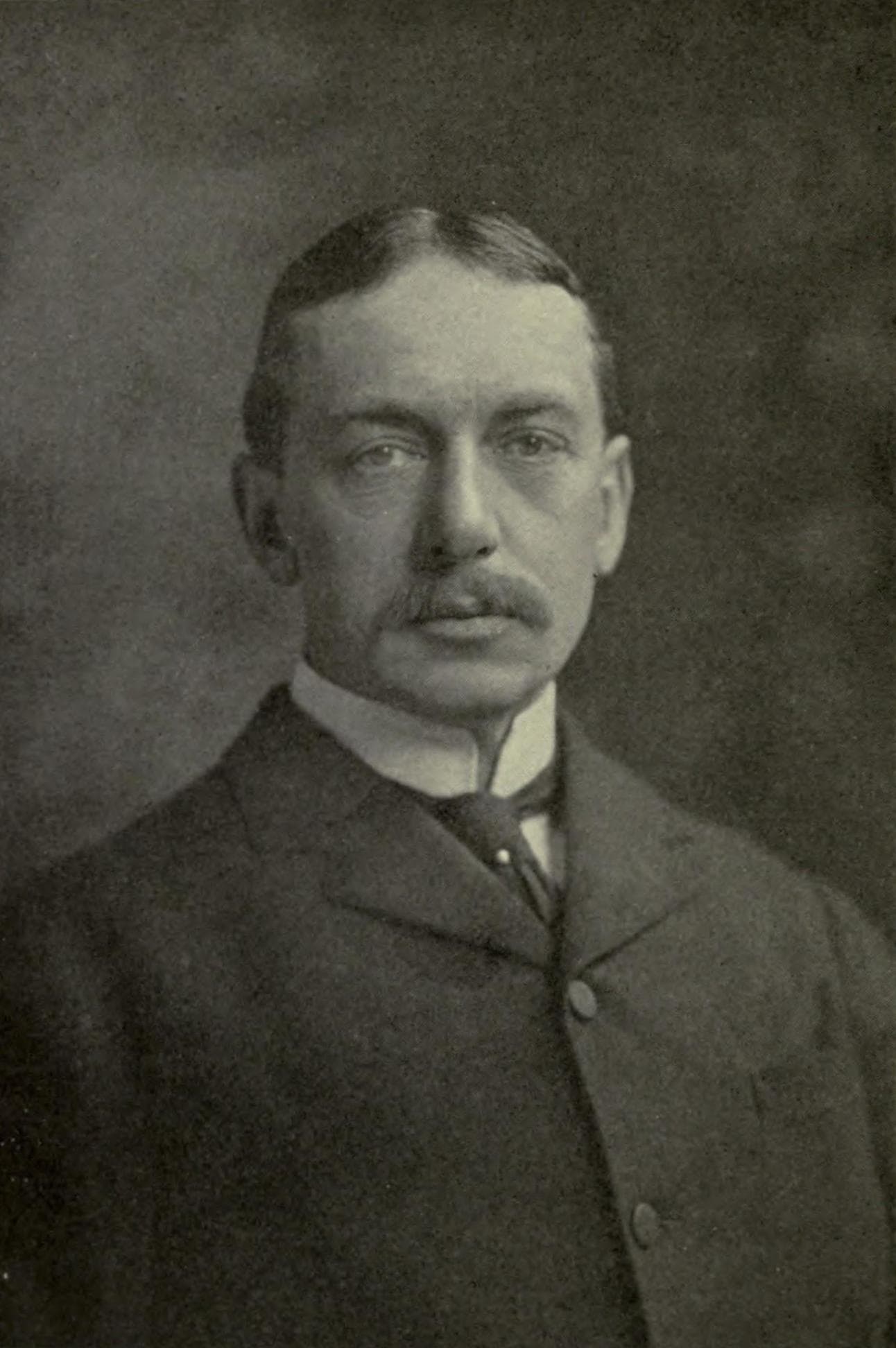
The Mongolian Gobi has long been recognized by leading international scholars as one of the earliest centers where life emerged and later spread across the world. Dr. Henry Fairfield Osborn, Director of the American Museum of Natural History and leader of the famous Central Asiatic Expeditions, once described Asia as the cradle of the continents. Russian palaeontologist I.A. Efremov also noted that while many regions of the Earth were submerged beneath ancient seas, the territory of Mongolia and adjacent Inner Mongolia remained one of the oldest continuous land masses. According to his research, this fertile land supported many ancient animals before the emergence of humans, and species spread from this region to India, North America, Eurasia, and even Africa.
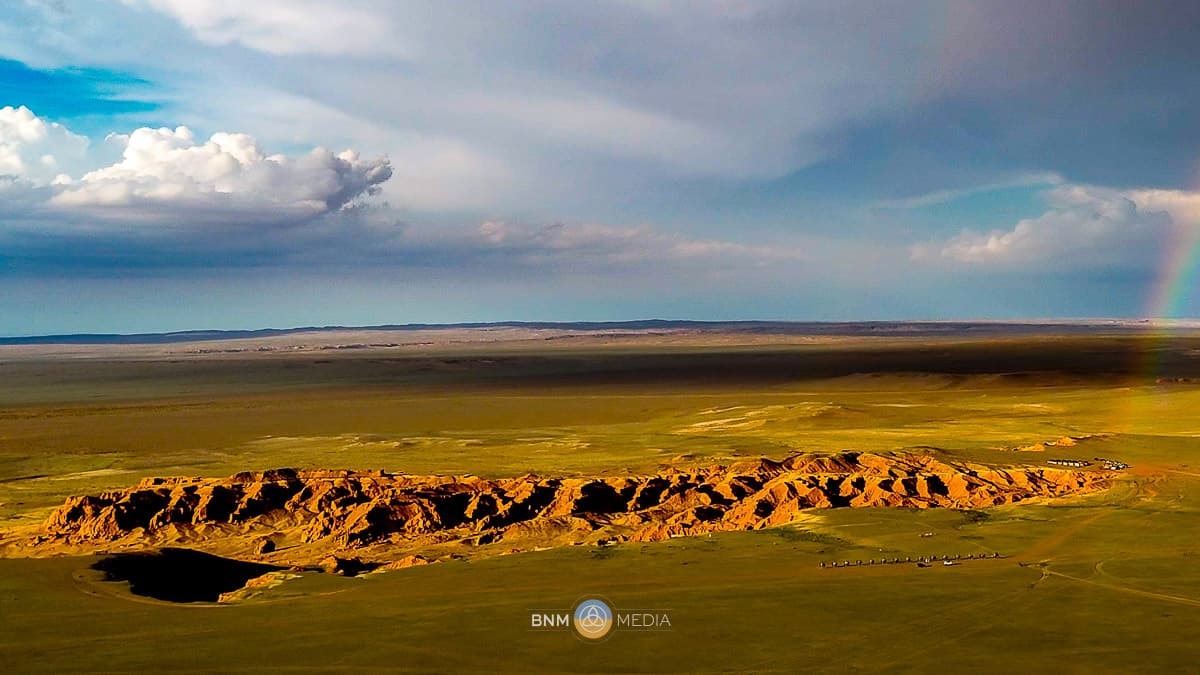
Bayanzag, located in Bulgan soum of Umnugovi province, is more than a dinosaur fossil site. It is a landscape that reflects millions of years of natural history and thousands of years of human presence. Bayanzag represents a cradle of ancient dinosaurs, early mammals, and prehistoric plant life, and it contains archaeological evidence showing that early humans moved through this region for thousands of years. It also lies along the historic Tea Road caravan route that once connected Beijing through the Mongolian Gobi to Karakorum, then westward through Khovd and Uliastai toward Turkestan and Kashgar, linking Central Asia with Europe.
The wider region, including Togrogiin Shiree, has produced world-famous paleontological discoveries, including the fighting dinosaurs fossil (a Protoceratops and Velociraptor locked in combat), a preserved nest of 17 juvenile Protoceratops, and nearby Stone Age workshop and rock art sites dated to 15,000-20,000 years ago.
Beyond science, Bayanzag is also a living cultural landscape where traditional Mongolian nomadic pastoral life continues. Herders still move seasonally across open plains, while wildlife such as black-tailed gazelle, white-tailed gazelle, grey wolf, houbara bustard, oriental plover, Mongolian sandgrouse, and saxaul sparrow remain part of this ecosystem.
Together, these geological, paleontological, ecological, and cultural values make Bayanzag one of the world's most unique destinations: a place where ancient life, human heritage, and living nomadic traditions coexist in the landscapes of the Mongolian Gobi.
Protection and What We Have Accomplished So Far
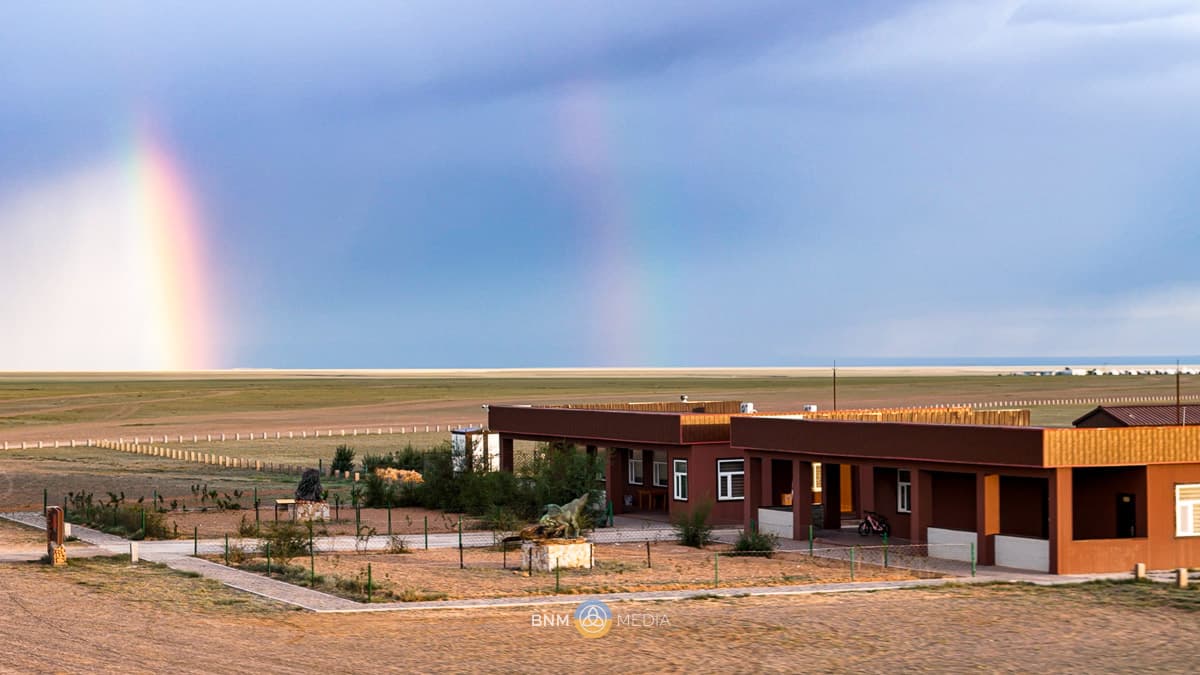
Before the Flaming Cliffs Cultural Management Plan 2018-2024, the site faced unregulated tourism, road erosion, littering, and even a proposal to build a ger camp directly on cliff edges. The management plan stopped these pressures and established stronger protection.
What Visitors Often Remember
Visitors travel through the land where dinosaurs once lived and often see fossil fragments and eggshells. They experience vast Gobi sunsets and sunrises and exceptionally clear night skies, where the Big Dipper, North Star, and the Milky Way appear vividly close. These moments inspire awe and deepen appreciation for Mongolia's ancient and unspoiled landscapes.
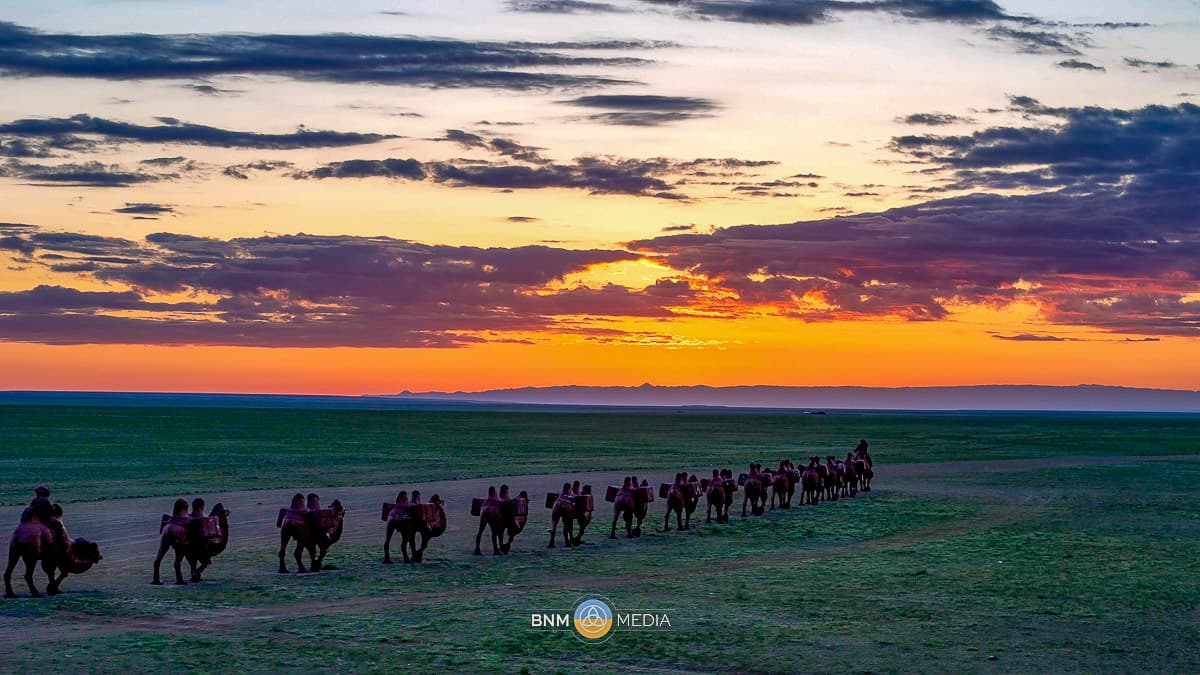
Travelers also encounter traces of Tea Road caravan routes established centuries ago by Mongolian traders connecting Asia and Europe. Faint tracks stretching toward Arts Bogd and Bulgan invite visitors to imagine the endurance required for desert caravan journeys.
Many visitors also value the living cultural heritage of Bayanzag. Community-led efforts to preserve and promote local traditions help the destination remain not only scientifically important, but culturally alive.
Life around the Flaming Cliffs has changed little in many respects. Visitors often come for dinosaurs and leave with deep respect for the people who still call this landscape home and continue a resilient nomadic way of life.
What Makes Flaming Cliffs Special
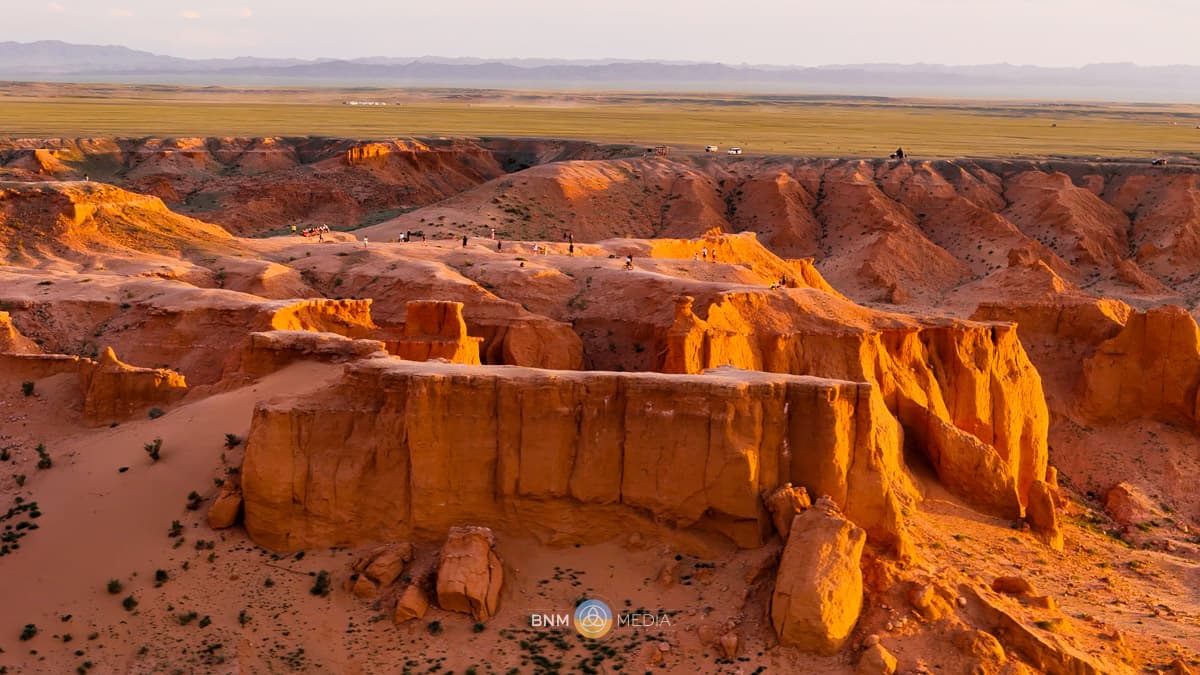
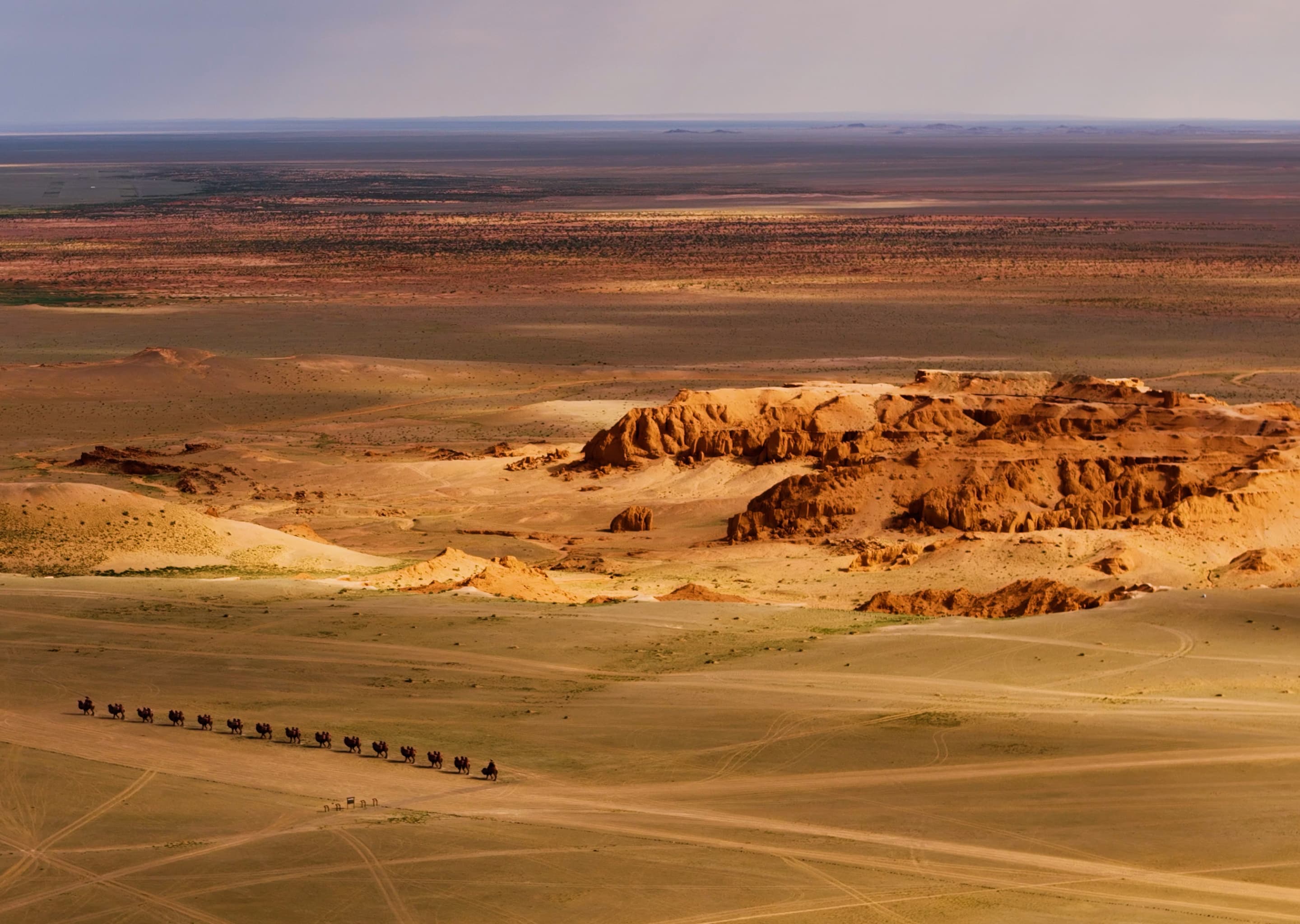
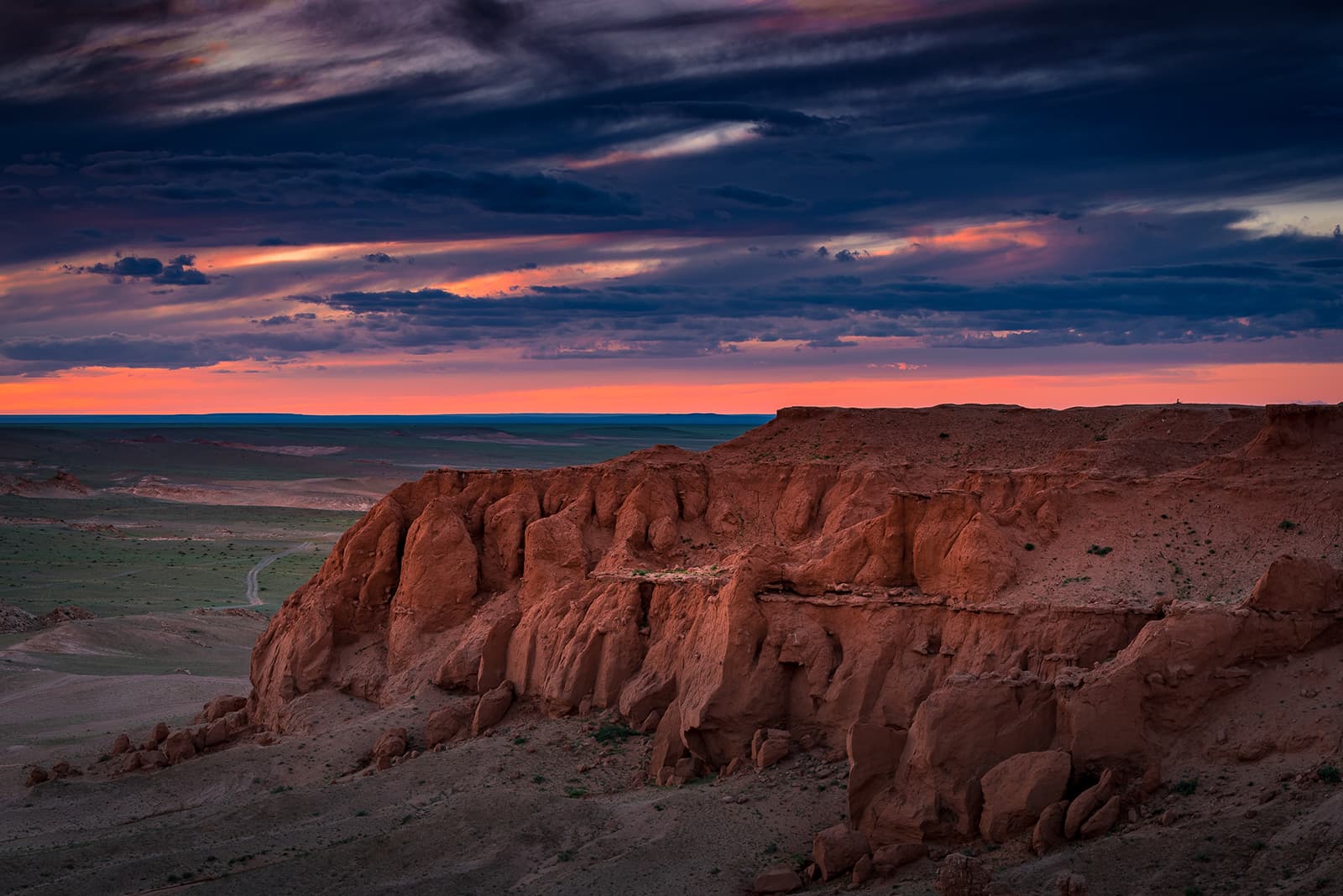
The towering red cliffs of Bayanzag glow like flames at sunrise and sunset, creating one of Mongolia's most iconic landscapes. Broad valleys remain largely untouched by permanent settlement and intensive urban development, preserving a rare sense of remoteness and authenticity.
Traditional nomadic pastoral culture continues here, with herding families maintaining ancestral livelihoods as livestock graze open pastures. Gazelle and other wild ungulates move across the plains in rhythm with the natural environment.
Visitors experience quiet mornings and evenings, endless open space, and a rare sense of tranquility while engaging with the living heritage of Mongolia's Gobi Desert.
What Visitors Understand After Visiting
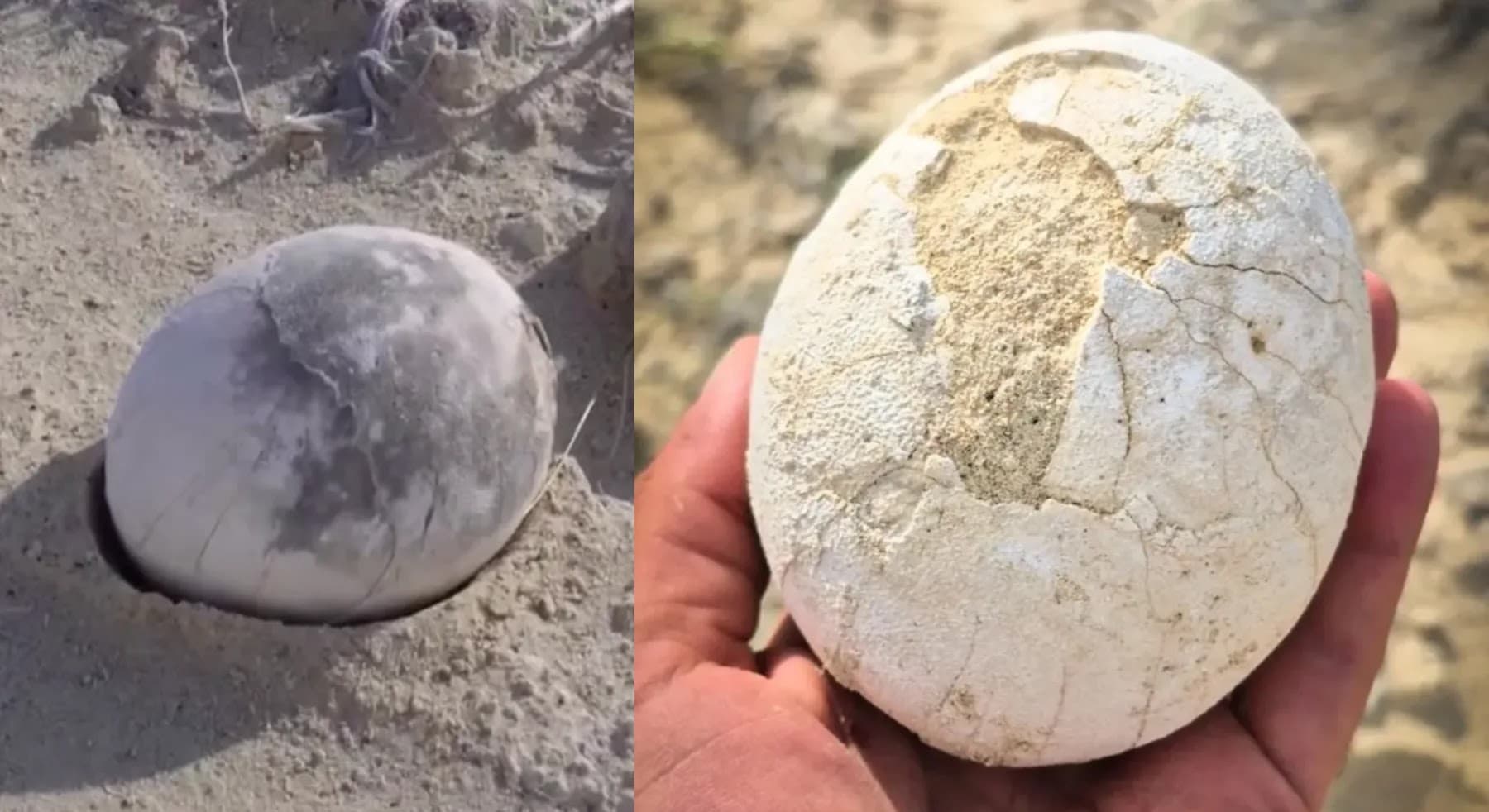
Bayanzag is globally known as the place where dinosaur eggs were first discovered in 1923 by Roy Chapman Andrews and his team from the American Museum of Natural History, reshaping paleontology and revealing a new Cretaceous world in Mongolia.
Visitors leave with a deeper understanding that Bayanzag is not only where ancient life was preserved, but also where life has continuously endured. Local herding culture, seasonal movement, and practical desert knowledge still define daily life today, just as exploration records from the early 20th century describe.
What Locals Value Most
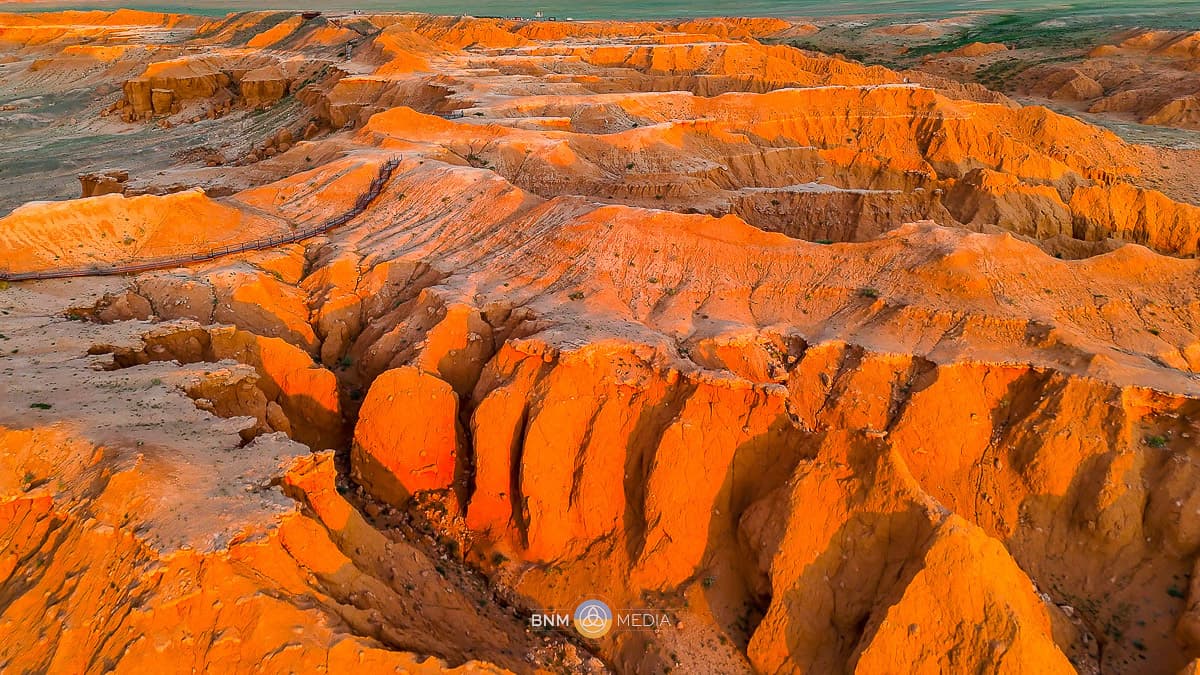
The local name for Bayanzag is Temeen Shavar, meaning Camel Cliffs, reflecting the towering formations that local people have long revered. From early times, locals recognized scattered fossil bones and referred to them as dragon bones.
As tourism grew in the 1990s, local communities increasingly understood Bayanzag's global significance as one of the richest dinosaur fossil localities and a birthplace of modern Mongolian paleontology. The place later became internationally famous as the Flaming Cliffs through Roy Chapman Andrews's writings, while remaining a deeply personal homeland for local families.
Tourism Snapshot
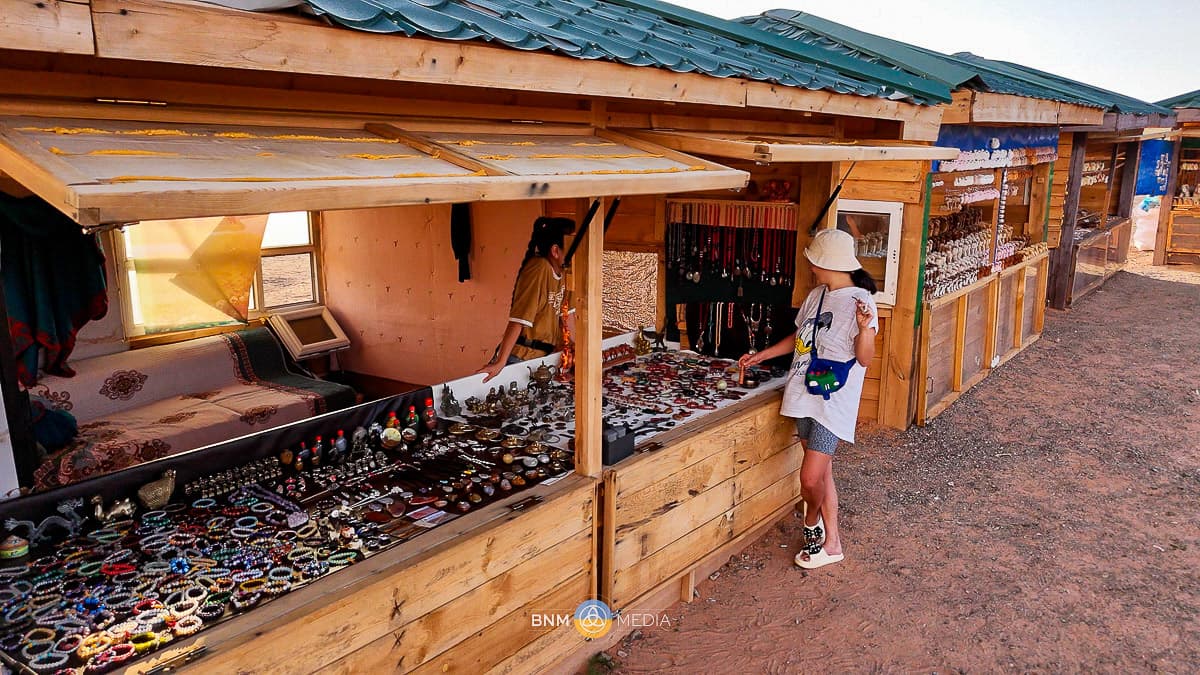
Tourism at the Flaming Cliffs brings both opportunities and pressures. Community-based protection and management has proven to be the most effective approach for balancing conservation and destination use.
Natural Areas and Biodiversity
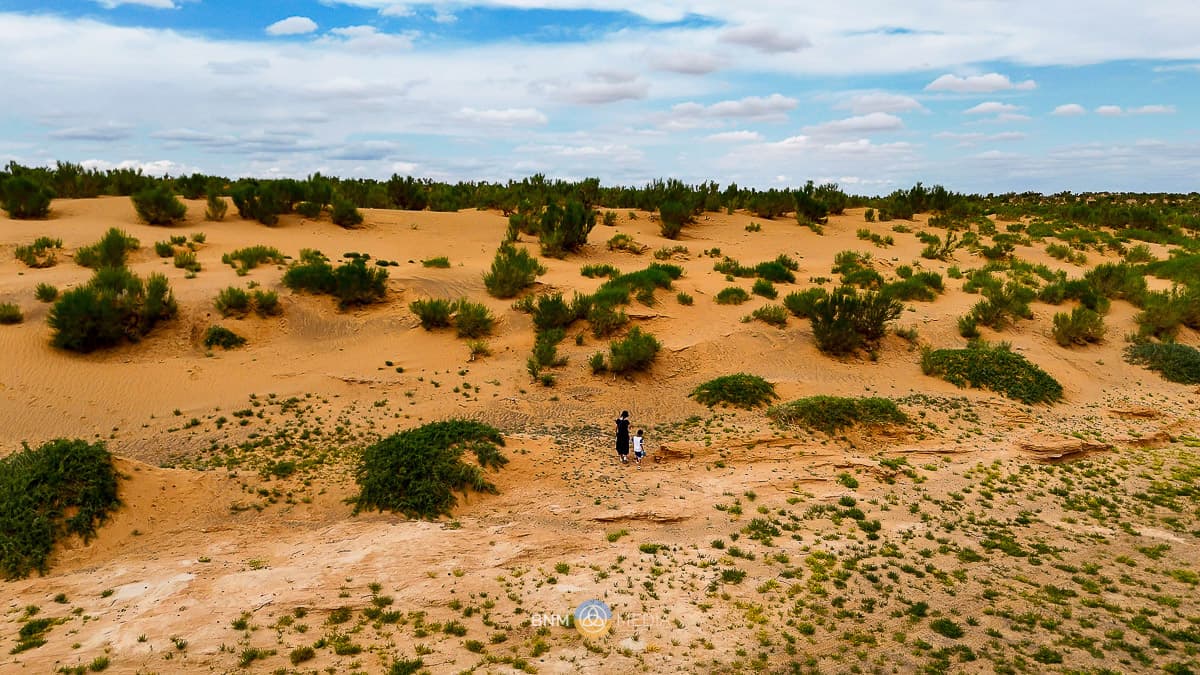
During 2024-2025, increased rainfall across Bayanzag and the wider Gobi appears to have improved breeding success among small mammals. New colonies of great gerbil have formed in local saxaul forests, and populations have grown.
Other likely beneficiaries include pygmy jerboas, Siberian jerboa, Tolai hare, long-eared hedgehog, and several gerbil species. This prey increase likely supports predators such as Pallas's cat, marbled polecat, and steppe polecat, along with raptors including lesser kestrel, saker falcon, and long-legged buzzard.
These changes underline the ecological importance of Bayanzag's saxaul ecosystem and show how favorable climate conditions can quickly strengthen biodiversity and food webs in the Gobi.
Cultural Identity and Traditions
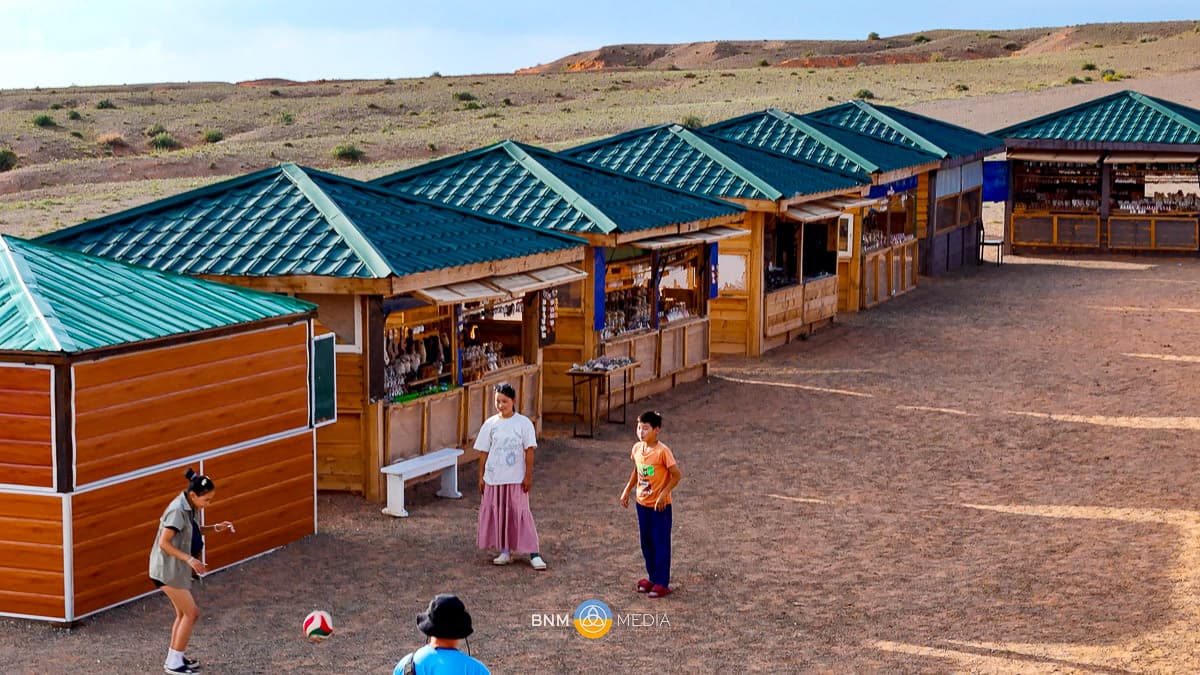
Traditional local agriculture remains active in the gateway community of Bulgan soum oasis, where households grow vegetables for nearby camps, households, and markets including Ulaanbaatar. Bulgan tomatoes are especially well known.
Local beliefs emphasize respect for land, sacred mountains, and water sources. Community life, school rhythms, and local festivals continue to express identity and continuity.
Management supports events such as the Soum Camel Festival, Harvest Festival, and Dal Bag Naadam, and allocates part of visitor ticket revenue directly to these community celebrations.
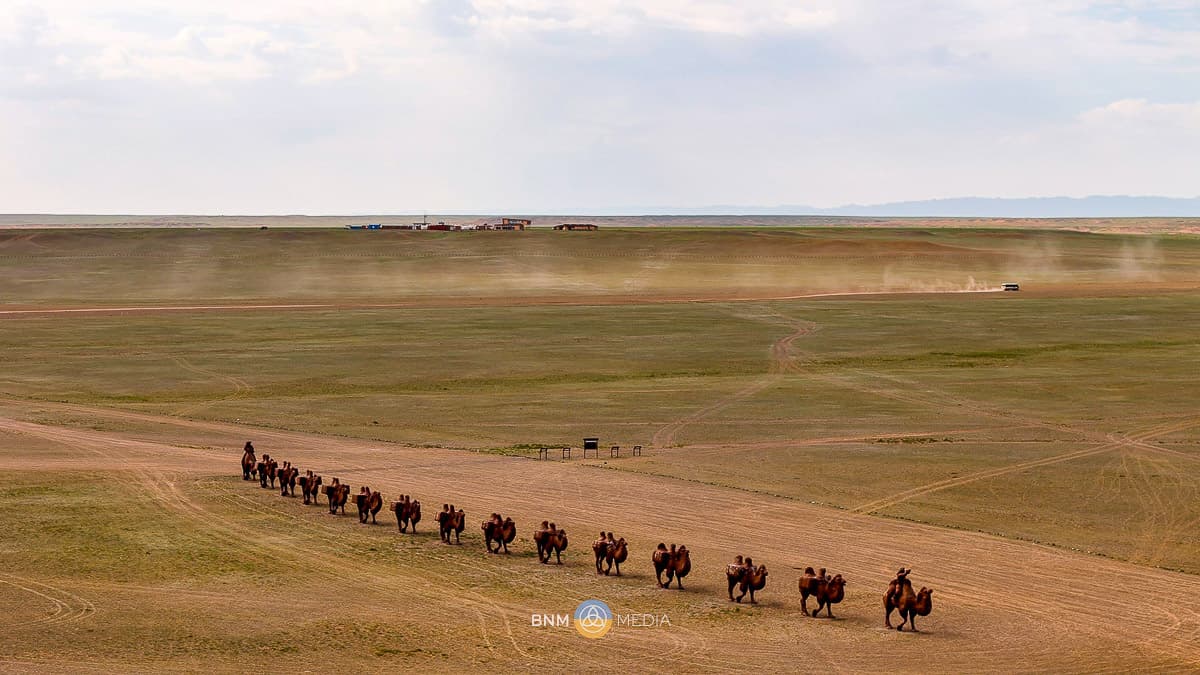
Camel heritage is especially important. As part of the 2026 maintenance plan, camel caravan displays were restored to present this living tradition to international visitors as an active part of destination identity.
Temeen Shavar — The Camel Cliffs
Local communities have long known Bayanzag by its original name: Temeen Shavar, meaning Camel Cliffs. When viewed from a distance, the towering red clay formations bear a striking resemblance to camels lying at rest — a silhouette deeply familiar to the nomadic herders who have moved across these plains for centuries.
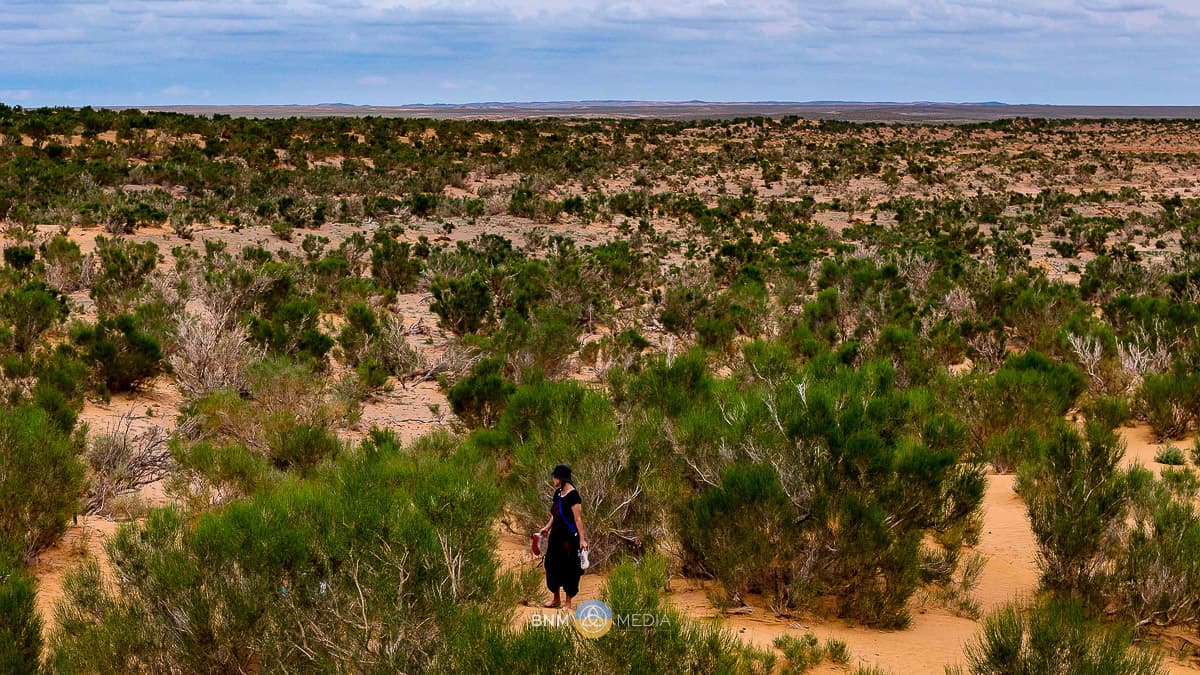
The name Bayanzag itself reflects the Mongolian tradition of describing the land by its abundance. 'Bayan' means rich or wealthy, and 'zag' refers to the saxaul tree — the hardy desert shrub that forms dense groves across this landscape and has sustained both wildlife and people for thousands of years.
In the broader region, place names follow this same pattern. Bayanborg mountain, Bayan-Ovoo soum — all speak to the richness that the land once offered to those who lived close to it. These names are not merely labels; they are living records of ecological memory passed down through generations.
When East Met West: Andrews and the Caravans
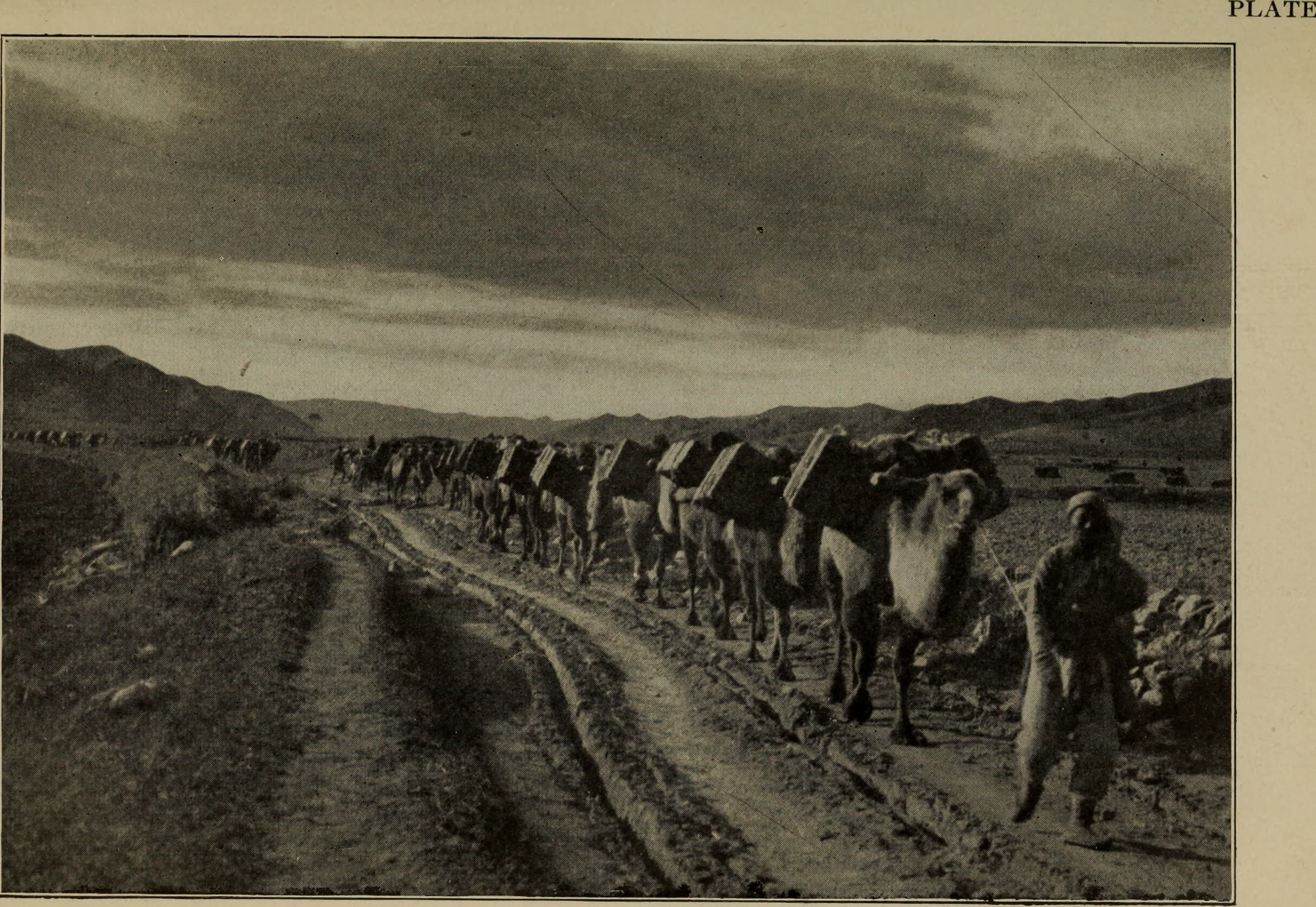
One of the most remarkable untold stories of Bayanzag is the encounter between Roy Chapman Andrews's expedition and the ancient Tea Road caravan network. During his time at Bayanzag, Andrews's team ran critically low on food after the supply camels failed to arrive on schedule. Stranded for nearly ten days without provisions, the expedition eventually encountered a Chinese trading caravan — 200 camels strong, accompanied by 16 merchants — making its way through the Mongolian Gobi.
Andrews met Chinese caravanners at Bayanzag at least three times during his expeditions. On one occasion, the exchange was symbolic in its simplicity: two handfuls of sugar offered as a gift, shared tea, and a moment of connection across languages and cultures in the middle of one of the world's most remote landscapes. Those caravans were traveling a route that stretched from Beijing through the Gobi, passing through Umnugovi's Khanbogd, Bayan-Ovoo, Khanghor, and Bulgan soums, before entering the ancient capital Kharkhorin, and continuing westward toward Khovd, Uliastai, Turkestan, and Kashgar.
This route — now recognized as one of the world's longest historic overland trade roads — passed directly across the plateau visible from Bayanzag today. Each caravan camel carried 300 to 400 kilograms of goods. They brought tea, silk, and manufactured goods westward; they returned with leather hides, animal furs, and dairy products. Beyond trade, these journeys sustained profound cultural exchange between Mongolia, China, and Central Asia.
Six Decades of Tourism at Bayanzag
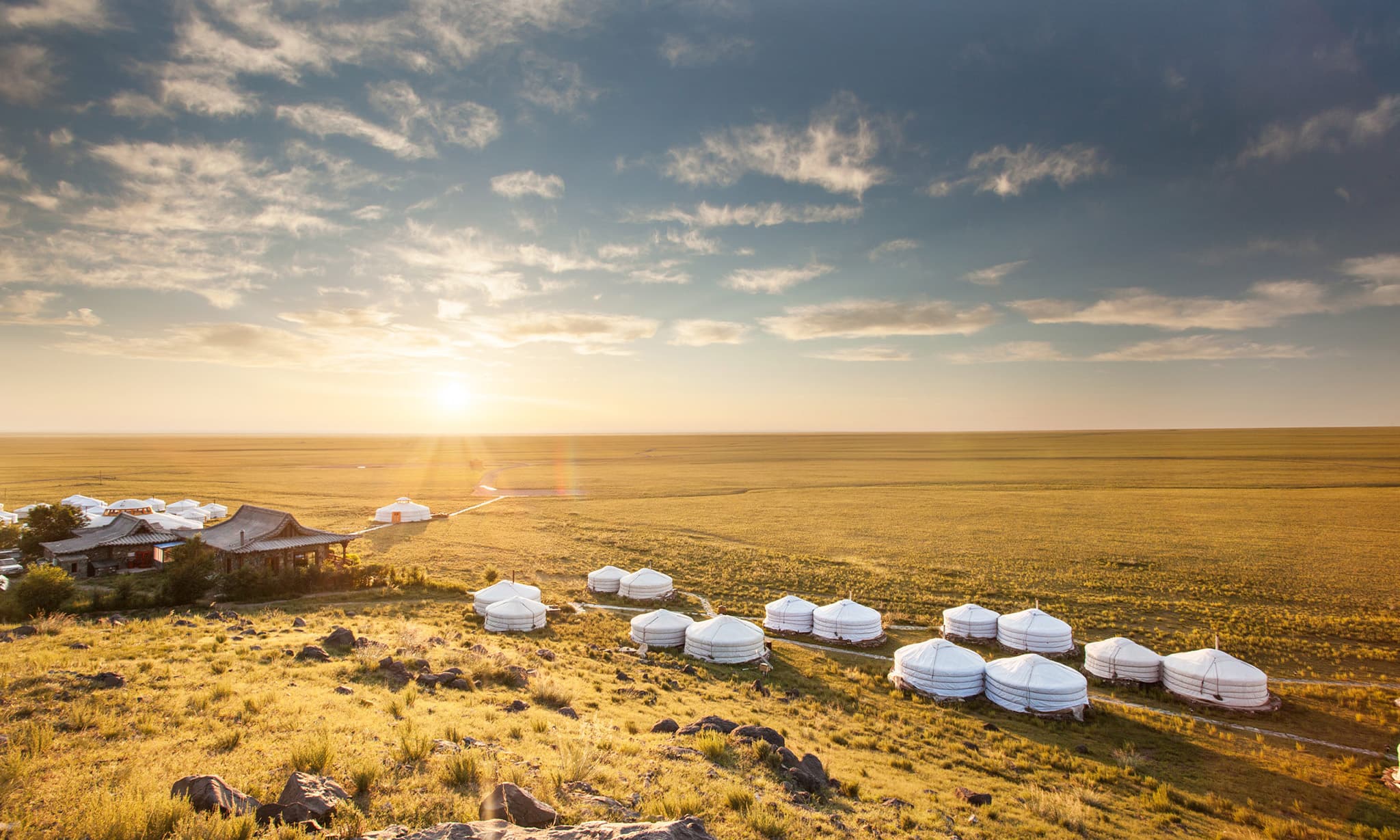
Mongolia's very first tourist camp was established at Bayanzag in 1963 — the origin of what is now the Juulchin Gobi camp in Umnugovi. For six decades, Bayanzag has remained the defining attraction of the entire region. As one long-time tourism professional recalls: 'If you have not seen Bayanzag, it is hard to say you have visited Umnugovi.'
In 1993, a senior executive from Sony Corporation visited the Gobi. After two days traveling the landscape, his parting words were: 'Tumensain, you don't need to develop this place.' At the time the remark seemed puzzling. Today, it reads as prophetic. Mongolia is recognized by The Nature Conservancy as one of the last great wild places on Earth — vast, least touched by human infrastructure, and still home to wildlife living as it has for millennia.
Roy Chapman Andrews himself expressed both admiration and regret after his expeditions: 'I organized these great journeys across this Mongolian landscape, and used traditional Mongolian camel transport combined with modern technology — that fills me with pride. But I also regret leaving vehicle tracks across such pristine and beautiful land.' His words remain a guiding caution for all who manage Bayanzag today.
The future calls not for mass tourism, but for what Bhutan and Nepal have modeled — fewer visitors, higher value, deeper experience. Bayanzag's carrying capacity is now being formally assessed. The plateau visible from the cliffs, where the Tea Road once ran, must remain free of development lines. Below it, the historic caravan route continues its quiet passage, as it has for centuries.
Photo & Video Gallery
View all →The Flaming Cliffs are more than just a historical site — they're a visual wonder.